

Flooding Complicates Voting Access for Navajo County's Election Day

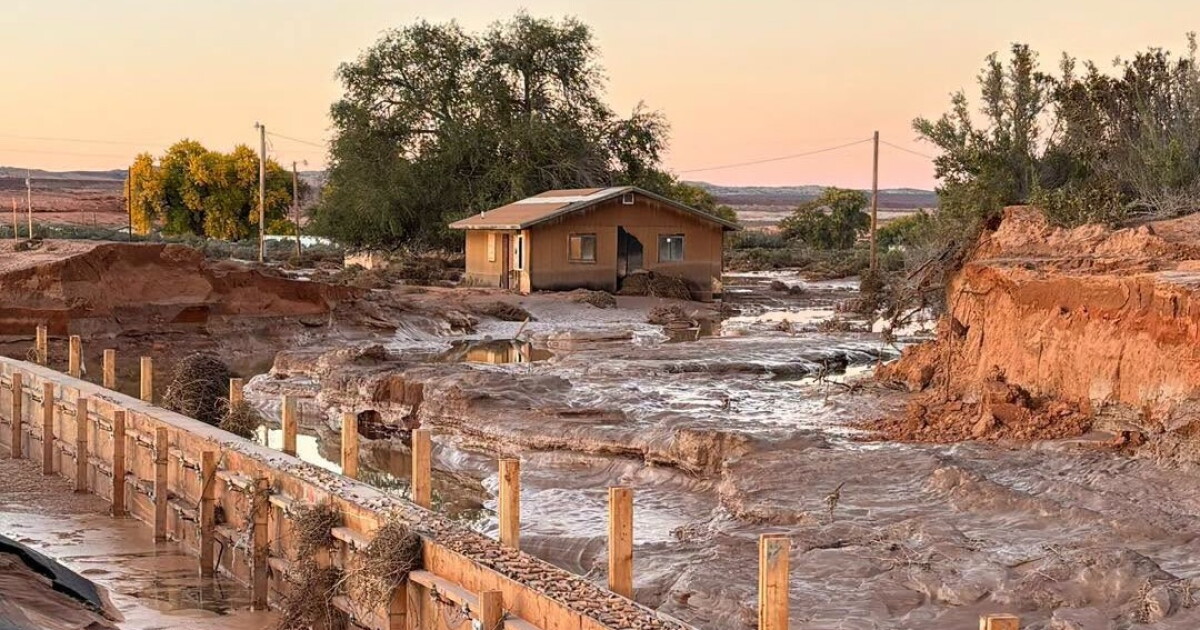
Severe Weather Impacts Voting in Navajo County Ahead of Elections
The approach of Election Day brings concerns for voter access in Navajo County as communities continue to recover from prior flooding. With severe weather warnings established by the National Weather Service, northern and eastern Arizona, including the Navajo Nation, prepares for additional rainfall that could affect voting activities.
Effective from Saturday night through Monday morning, a flood watch warns of potential heavy rain, which may add an extra inch to the already saturated ground. Christen Haddox, the Deputy Elections Director for Navajo County, emphasizes the importance of preparing polling locations, especially in the rural areas that could face impassable roads due to the forecasted storms.
“Specifically Black Mesa is on a terrible dirt road,” Haddox said, highlighting the challenges posed by wet conditions that exacerbate travel difficulties for voters. The ongoing effects of last week's flooding still inhibit many residents, particularly in the Navajo Nation and Hopi Reservation, where water and electricity services remain disrupted.
As of Friday morning, reports from the Navajo Tribal Utility Authority indicate outages impacting towns including Tuba, Kayenta, Chinle, Ft. Defiance, and Shiprock. In light of these challenges, Haddox remains proactive about monitoring weather developments. “I’m watching the weather every single day. Hopefully, we’re going to see some better weather Monday and Tuesday is what I have my fingers crossed for,” she stated.
In response to possible road closures, officials are prepared to guide voters to alternative polling places to maintain access. Haddox reassured, “We’re ready for plan A, B, C, D, E, F, G, H, I. So whatever happens, we’re going to figure it out and do what we have to do.”
Voting advocates recommend that tribal members consider early voting as a precaution against potential disruptions on Election Day. Janie Parrish, the executive director of Arizona Native Vote, noted, “Our only defense is early voting at this point and getting that message out to as many people as we can.” She stressed that despite the ongoing crises, participating in elections remains vital.
“We can take care of our communities and we can vote,” Parrish continued. She underscored the significance of Indigenous votes in shaping decisions about critical resources and infrastructure, reminding communities that their participation directly impacts these areas of concern.
Furthermore, the U.S. Department of Justice plans to oversee polling places in the region to ensure translation services are appropriately offered, although this presence raises concerns for some. Parrish mentioned, “Any type of police authority can deter people. You just never know. So I’m hoping that they’re there for good and not for intimidation factors.”
Reflections on previous elections linger amidst these uncertainties; Parrish recalls the disruption faced during the 2024 presidential election due to bomb threats that resulted in polling site closures. Nevertheless, she remains dedicated to increasing voter turnout, stating she will continue arranging transportation for tribal members to access polling locations.
A resident of Rock Point, one of the communities significantly affected by flooding, characterized the recent events as a “once-in-a-generation” occurrence, underscoring the severity of conditions facing residents as Election Day approaches.