

Trump's Proposal for Autism Treatment Faces Doubt and Criticism

Trump’s Proposal for Autism Treatment Draws Mixed Reactions
President Trump's recent suggestion for a treatment approach to autism spectrum disorder has generated varied responses from healthcare professionals and families. The proposed intervention involves leucovorin, a prescribed form of vitamin B9, which some view as a beacon of hope while others express skepticism and concern regarding its effectiveness.
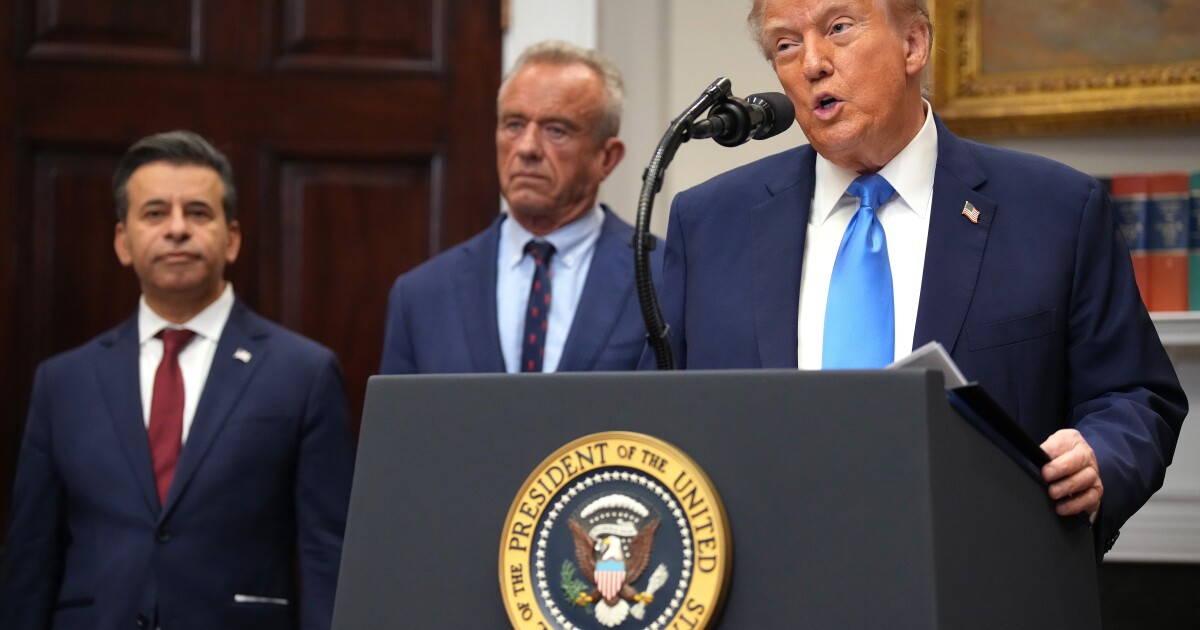
During a recent White House press conference, Trump associated autism causation with Tylenol and promoted leucovorin as a potential solution. Caitee Donovan, a mother of an autistic child, commented on the proposal’s implications, stating, “I think that this entire thing has been a bit misleading.” Donovan emphasized that autism is an intrinsic part of her daughter's identity and expressed worries about oversimplifying the disorder.
Health and Human Services Secretary Robert F. Kennedy Jr. characterized the leucovorin therapy as an invigorating option that could aid numerous children affected by autism. Trump himself underscored the optimism it brings to concerned parents. The administration has connected leucovorin to cerebral folate deficiency (CFD), a condition that, while linked to some autism symptoms, still lacks a clear correlation with the disorder.
Many advocates, including Donovan, caution against viewing this treatment proposal as an easy fix for a multifaceted condition. Jax Bayne, an advocate with autism, reiterated that those in search of a cure might not fully grasp the complexities of autism. Experts widely agree that autism is influenced by various factors, with genetics playing a prominent role. “We know now that there are 100 or more autism genes, and we estimate there’s probably about 400,” stated Jonathan Sebat from the University of California, San Diego.
Leucovorin's Potential and Concerns
Leucovorin has been utilized since 1983 primarily in cancer treatments, protecting healthy cells during chemotherapy. Under the current administration’s direction, the FDA is contemplating updates to its guidance regarding leucovorin to reflect its potential role in alleviating symptoms of CFD in both children and adults, as shown in an FDA document.
Cerebral folate deficiency is a rare condition characterized by insufficient vitamin B9 in the brain, which can result in symptoms mirroring autism, including intellectual challenges and seizures. Although some studies suggest that approximately 38% of individuals on the autism spectrum may also have CFD, the direct causal link remains a subject of debate.
Leucovorin can bypass immune barriers, potentially allowing folate to reach brain cells more effectively. However, evidence supporting its efficacy in treating autism is still ambiguous. Research outcomes have varied, with a study in India and a trial in the United States reporting only modest improvements.
Experts in autism research, including Alycia Halladay from the Coalition of Autism Scientists, have voiced concerns regarding the premature endorsement of leucovorin for autism, indicating that comprehensive clinical trials are essential to ascertain its safety and effectiveness. The Coalition remarked, “It is premature to claim that leucovorin is an effective treatment for autism.” Medical authorities stress that rigorous testing and validation of leucovorin is necessary, aligning with standards typically required for pharmaceutical treatments.