

Federal Reserve Maintains Rates Amid Economic Pressures from Iran Conflict

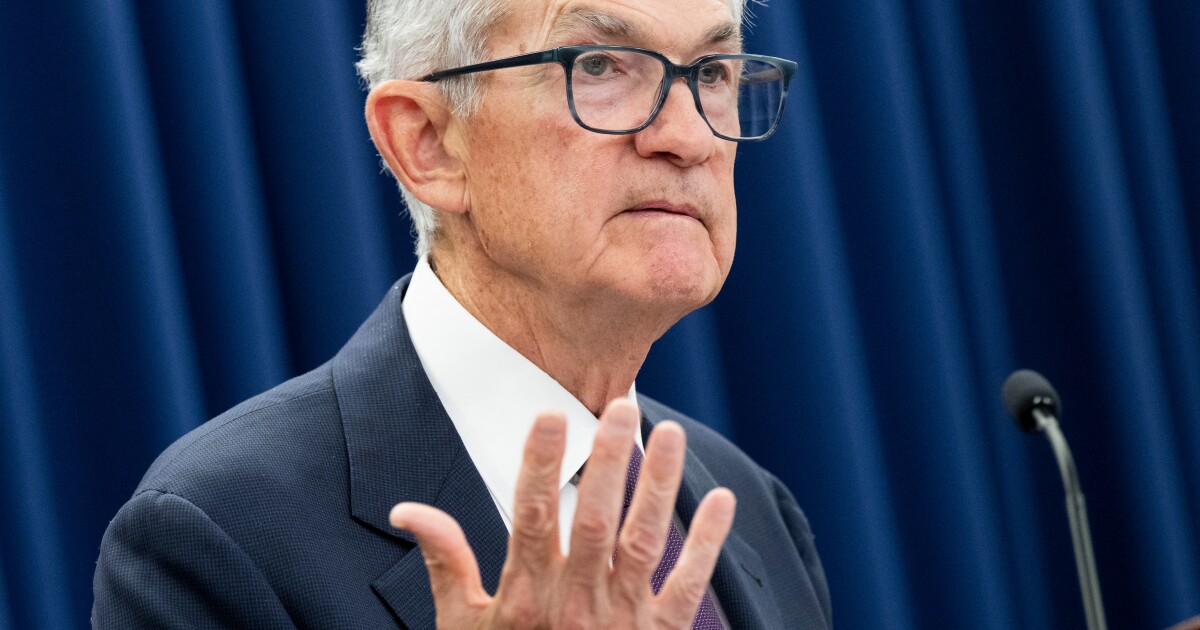
Federal Reserve Maintains Interest Rates Amid Economic Pressures
Updated March 18, 2026 at 4:38 PM EDT
The Federal Reserve opted to keep its benchmark interest rate unchanged during its latest meeting, citing a mix of economic uncertainties. This decision arrives at a time when the job market exhibits signs of cooling while inflationary pressures are influenced by ongoing conflicts in Iran, creating a delicate balancing act for the central bank.
In their official statement, Federal Reserve policymakers acknowledged that “Uncertainty about the economic outlook remains elevated.” They noted that the economic impacts stemming from Middle Eastern developments remain unpredictable. The interest rate decision was supported by a vote of 11 to 1, with Steven Miran, a former economist for the White House, advocating for a reduction of a quarter point.
The Federal Reserve's committee indicated that there is likely to be only one rate cut in the timeline of this year, consistent with previous forecasts made in December. This comes despite earlier indications of a stabilizing labor market. A recent report from the Labor Department revealed job losses of 92,000 in February, pushing the unemployment rate to 4.4%. Notably, the job growth figures for the preceding two months included downward revisions, presenting a picture of negligible growth over the last half-year.
The conflict in Iran has exacerbated challenges within the global energy sector, leading to substantial increases in gasoline and diesel prices. Although fluctuations in energy prices typically do not influence the Fed's decisions, sustained increases in diesel costs could raise transportation expenses across the board.
Michael Pearce, the chief U.S. economist for Oxford Economics, pointed out that these circumstances are likely to exert “big, upward pressure on inflation in the near term.” He elaborated that such price increases could ultimately hamper consumer spending, complicating the Federal Reserve’s policy considerations amid these new economic shocks.
Inflation rates were already under scrutiny, with January's rate hitting 3.1%, surpassing the Fed’s target of 2%. The wholesale inflation data for February also exceeded expectations, which raises concerns about sustained inflationary trends.
Leadership Changes at the Federal Reserve
As the term of Jerome Powell, the current chair of the Federal Reserve, approaches its end in May, questions regarding leadership have surfaced. President Trump has nominated Kevin Warsh to take Powell's place; however, potential delays loom due to Sen. Thom Tillis of North Carolina, who has threatened to obstruct the nomination until a Justice Department inquiry into the Fed concludes.
Recent judicial decisions concerning the Justice Department’s subpoenas were ruled improper, as they aimed to pressure Powell and others regarding interest rate adjustments. Tillis referred to the ruling as exposing the investigation’s “weak and frivolous” basis, yet the Justice Department continues its efforts.
If confirmation for Warsh is postponed, Powell may remain in his position even through the summer, as he can serve as a board governor until 2028.
Pearce noted, “That would be highly unusual, but then what’s also unusual is an ongoing criminal probe into a sitting Federal Reserve chair.” Powell reiterated his commitment to uphold the independence of the Fed against political influence, stating, “I have no intention of leaving the board until the investigation is well and truly over.” He also indicated that he has not yet decided about continuing his role as governor after his term concludes.