

Trump's Controversial Census Plan: Excluding Noncitizens Raises Debate

Updated August 7, 2025 at 11:18 AM EDT
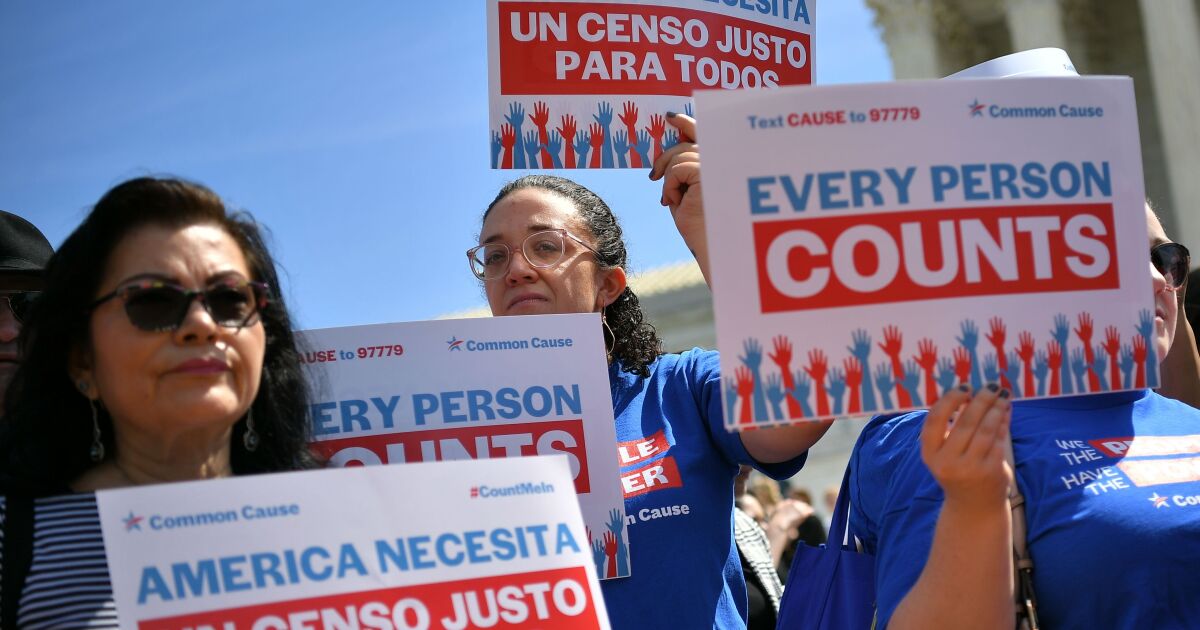
President Trump has announced a controversial initiative aimed at revamping the nation's census by excluding undocumented immigrants. This proposed change represents a significant departure from the United States' long-standing practice of counting every person residing within its borders, a principle established since the first census in 1790.
The announcement, made via social media, directs the Commerce Department to conduct this new census based on the results and information from the 2024 Presidential Election. However, the reason for correlating the census with electoral outcomes remains unclear.
Legal Ramifications of the Proposal
The U.S. Constitution under the 14th Amendment mandates that every state must be counted for the purpose of representation. Nevertheless, the process by which the census is conducted falls under the authority of Congress, per Article I of the Constitution. Title 13 of the U.S. Code establishes that the census is conducted every ten years under the leadership of the Secretary of Commerce. Importantly, while mid-decade censuses can occur, their findings do not influence the apportionment of congressional seats or Electoral College votes.
Legislative Support and Political Context
Concurrent with Trump’s announcement, a House bill put forth by Rep. Marjorie Taylor Greene mirrors this census initiative, seeking to exclude noncitizens from counts before the 2026 midterm elections. Trump expressed optimism regarding the bill’s passage, stating, “It’s going to get in. It’s going to pass, and we’re going to be very happy.”
Republican efforts to exclude non-citizens from the apportionment calculations for the 2030 census have revived discussions on this contentious topic. Trump’s comments align with broader strategies aimed at consolidating GOP power in the U.S. House, particularly in key states such as Texas.
History of Census Controversies
This current push for a modified census is reminiscent of Trump’s earlier attempts during his first term, which faced significant legal opposition. The U.S. Supreme Court previously halted the inclusion of a citizenship question in the 2020 census and refrained from ruling on issues related to the apportionment counts of undocumented immigrants. Moreover, President Biden's executive actions in 2021 reaffirmed the inclusion of all residents in census counts, an order later reversed by Trump.
Research by the Census Bureau contends that adding a citizenship question could result in participation hesitance, particularly among Latino and Asian American households. The bureau has indicated that detailed citizenship inquiries may also lead to inflated costs and inaccuracies in the census data.
Potential for Legal Challenges
Trump’s recent announcement is likely to trigger legal disputes akin to those observed during his earlier term. Changes to the 2030 census could potentially be overturned by future administrations or Congress, especially if the focus on excluding undocumented immigrants creates barriers to participation within immigrant communities.
While past census efforts have touched on citizenship status, Trump's proposal to systematically question households diverges from the historical norm of the count, which has never fully encompassed such a direct approach.