

Push for Permanent Water Bill Support in Michigan Gains Legislative Momentum

Legislative Push for Water Bill Support Gains Traction in Michigan
Amidst rising water costs impacting many residents in Michigan, Representatives Debbie Dingell and Rashida Tlaib are championing a fresh legislative effort to establish a dedicated fund for water bill assistance aimed at low-income families. This proposal, which was revitalized in April, is designed to alleviate the financial hardships faced by those struggling to maintain their water services.
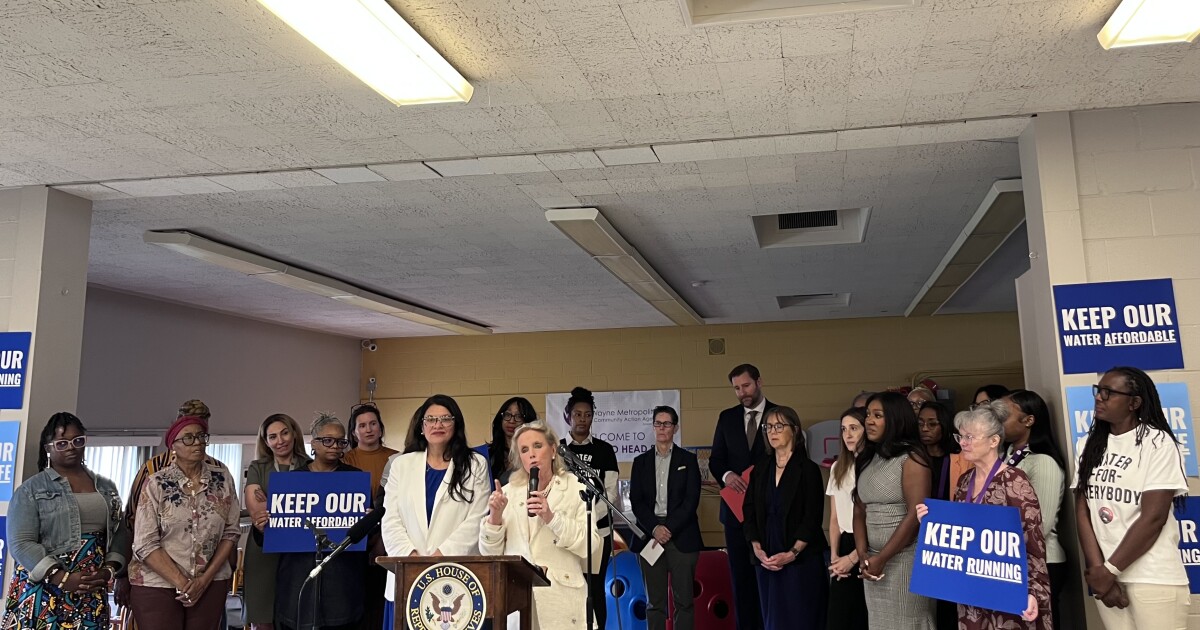
Representative Tlaib shared a powerful narrative during a recent gathering at the Wayne Metropolitan Community Action Agency in Dearborn Heights, where she described a retired couple needing to melt snow to flush their toilet. “I just thought, ‘oh my God, that’s so incredibly inhumane,’” she remarked, underscoring the urgent need for action. “Why can’t we make sure that his water stays on? Especially when he worked all his life and it was just the water costs went up.”
A study conducted by the University of Michigan highlights a troubling trend: a significant reduction in federal investments directed toward water infrastructure, leading to soaring water rates. In 2023, the city of Highland Park nearly faced municipal bankruptcy due to outstanding water debts, illustrating the profound impact of these costs.
For many Michigan residents living on fixed or limited incomes, the challenge of managing rising bills is increasingly daunting, particularly as inflation continues to rise. Although there are federal programs designed to assist with energy costs, no ongoing support specifically covering water expenses exists.
In response to the urgent need for assistance, Tlaib and Dingell previously played crucial roles in advocating for a temporary water bill relief program during the pandemic, which mirrored existing help for energy costs. However, Tlaib noted, “the money has run out, and that’s why we’re here (advocating for this bill),” emphasizing the necessity of enduring support. The Michigan share of the $1.1 billion federal fund had previously helped over 30,000 households maintain access to water services.
Dingell expressed the profound implications of these financial struggles, stating, “No person should have to decide whether they pay their water bill or buy groceries.” She continued, highlighting the concerning choices many families face, stating, “No senior living on a fixed income should worry that turning on the faucet could mean falling behind on their medication, and no child should ever come home to a house without running water because their family couldn’t keep up.”
As discussions move forward, Dingell is advocating for her colleagues on the House Appropriations Committee to consider the proposal seriously. While both legislators are hopeful, they recognize that significant progress on the bill may be constrained by the upcoming midterm elections.
Tlaib expressed optimism for the bill’s future, suggesting that it might be included in the EPA budget in a manner similar to prior pandemic relief initiatives. However, she acknowledged the need to regain legislative control, stating, “No one’s in opposition. I think it’s just more about how much (we can appropriate) and when.”