

Michigan Democrats Seek Unity Amid Differences Ahead of November Election

Michigan Democrats Work Towards Cohesion Amid Policy Divisions
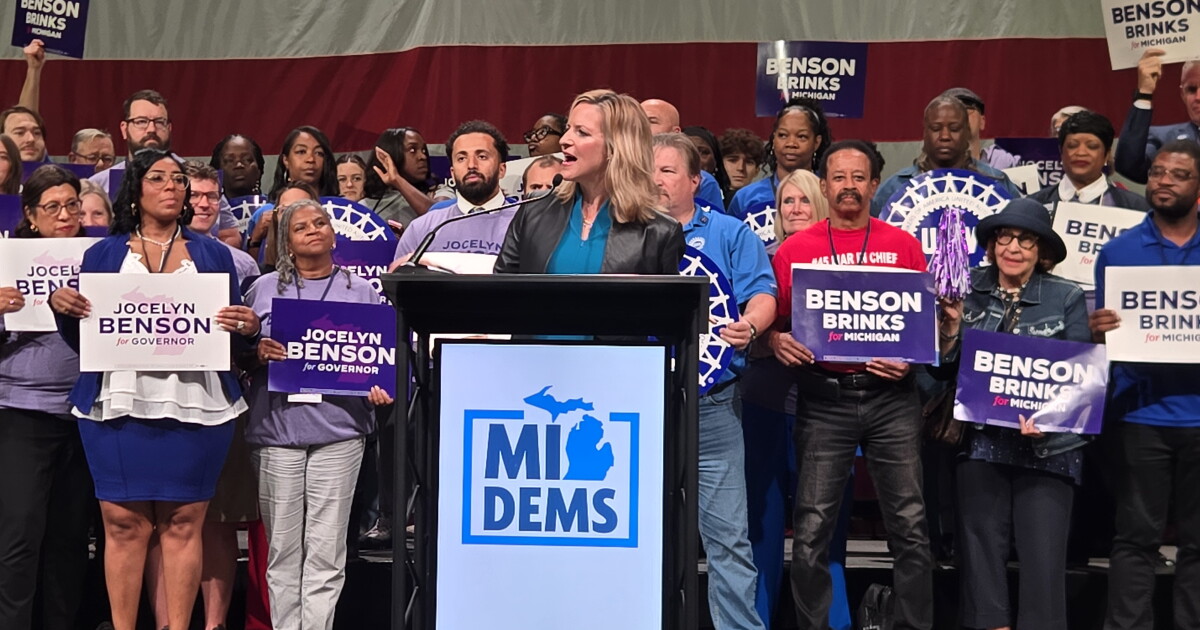
The Michigan Democratic Party convened in Lansing recently for a nominating convention aimed at fostering unity among its members. This gathering comes in the wake of significant policy disagreements that emerged following the August primary, especially concerning foreign policy and campaign strategies. A focal point of the discussions was the relationship between Democratic senatorial candidate Abdul El-Sayed and the party's Jewish delegation.
El-Sayed has publicly criticized U.S. support for Israel's military actions in Gaza and Lebanon, a stance that has raised concerns among some Jewish Democrats. They believe his remarks may inadvertently exacerbate antisemitism by suggesting that pro-Israel lobby donations unduly influence American politics.
In response to these worries, El-Sayed expressed his commitment to unite against the Trump administration, emphasizing the shared values within the party. "I believe in the safety and the dignity of Jewish kids, like I believe in the safety and dignity of my own kids. And we can show here in Michigan how we can disagree agreeably on some of those issues having to do with what we do 6,000 miles away," he told reporters during the event.
During the convention, El-Sayed also conveyed an apology to the Jewish Caucus for his earlier comments relating to an attempted terrorist attack in West Bloomfield. "To anybody who feels like my comments might have been hurtful, I’m really sorry. That was not my intention. We condemned that terrorist attack. We condemned it outright," he clarified, adding that his intention was to provide context, not to diminish the gravity of the incident.
To further bridge gaps, El-Sayed plans to engage in additional dialogues with the Jewish community to strengthen ties.
As the convention progressed, party leaders sought to realign their focus and connect with voters by critiquing the Republican opposition and associating them with President Trump’s controversial policies. Michigan Secretary of State and Democratic gubernatorial nominee Jocelyn Benson reiterated the party's unified objectives, stating, "You’re going to hear us all talking about driving down the cost of healthcare...representing our individual communities the best way we know how."
Before the main assembly, Democratic candidates also engaged in discussions with smaller groups to address pressing issues. Attorney General nominee Eli Savit underscored the need to enhance consumer and worker protections, particularly regarding wage theft. "That’s something that’s impacting the economic crisis...we’re going to go after those bosses and we’re going to get money back in workers’ pockets," Savit emphasized.
Meanwhile, Republicans are attempting to attract moderate Democratic voters by characterizing the Democratic platform as excessively progressive, particularly on issues related to economic policies and cultural topics like transgender student athletes.
In rural Michigan, affordability remains a chief concern. Karen GreenBay, chair of the Mecosta County Democratic Party, noted that economic pressures are severely impacting local communities. "The main thing is affordability. It’s really hitting hard in rural Michigan for us," she stated, stressing the need for candidates to deliver on their promises once in office.
As the general election in November looms, Michigan voters can expect mail-in ballots to be distributed beginning September.