

Federal Plan to Slash Colorado River Water Allocations for Three States
- Better American Media

- 12 minutes ago
- 2 min read
Federal Proposal Could Dramatically Reduce Water Allocations in the West
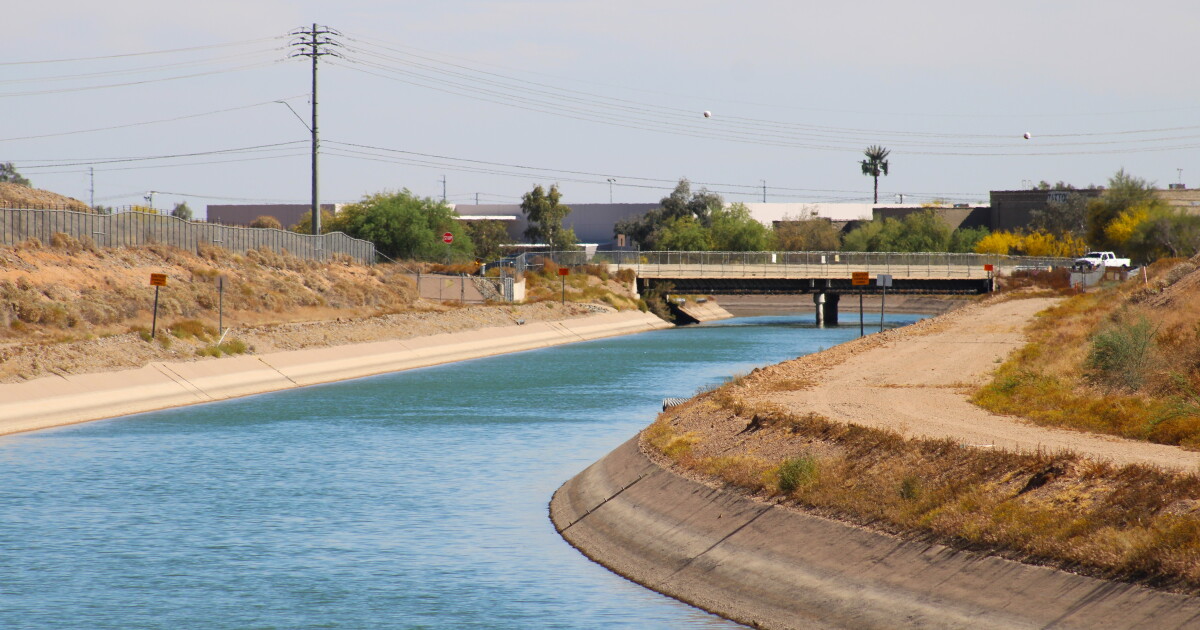
As drought conditions persist and the effects of climate change escalate, a new federal proposal may greatly impact water supplies sourced from the Colorado River for states like Arizona, California, and Nevada. According to a recent study by water experts, these states could see annual water cuts of approximately 40% from 2028 to 2036, with Arizona expected to experience the most severe reductions.
This significant intervention comes as a response to historically low water levels in the Colorado River and the challenges faced by the seven states that rely on its resources to reach consensus on necessary water usage reductions. The study highlights that the scale of the proposed cuts is unprecedented, with potential economic implications that have no previous parallels.
Arizona leaders have already taken steps to address the situation, successfully negotiating a temporary reduction in water usage of 20% for the years 2026 and 2027. However, concerns remain about the long-term ramifications of these federal cuts, which officials describe as potentially "draconian" for both the economy and the communities reliant on Colorado River water.
The regional experts, who have been informally dubbed the "Traveling Wilburys" of the Colorado River, further reinforce these concerns in their report, which examines the potential fallout from the proposed reductions. Co-author Jack Schmidt emphasized that achieving these cuts would be “completely unprecedented in the Lower Basin” and warned of the serious economic consequences associated with such drastic measures.
Schmidt advocates for a more equitable distribution of reductions across different states, noting that the Upper Basin states—including Colorado, Utah, Wyoming, and New Mexico—are not currently subject to mandatory cuts under the proposal. “There’s no way you can ask the Lower Basin to make those magnitude cuts and not ask the Upper Basin to do anything,” he stated.
The study indicates that if these water cuts proceed as planned, the Lower Basin states could be forced to manage their water use at levels not seen since 1935. It also suggests possible areas for reduction, such as the Imperial Irrigation District in California, where decreases could occur without substantially harming agricultural productivity.
Despite the efforts made by the Central Arizona Project (CAP) to lower its water usage in recent years, the study points out that other users of the Colorado River in Arizona have not reduced their consumption at equivalent rates. Schmidt noted, “You’re going to have to find a way in Arizona to reduce the sum of those other users… You can’t have a system where all the cuts are being taken by CAP and the other users’ line just sort of stays flat.”
For those looking for more detailed insights, the complete report is available here [PDF].