

Arizona's Water Security: Impacts of Colorado River Negotiations
- Better American Media

- Jun 14
- 3 min read
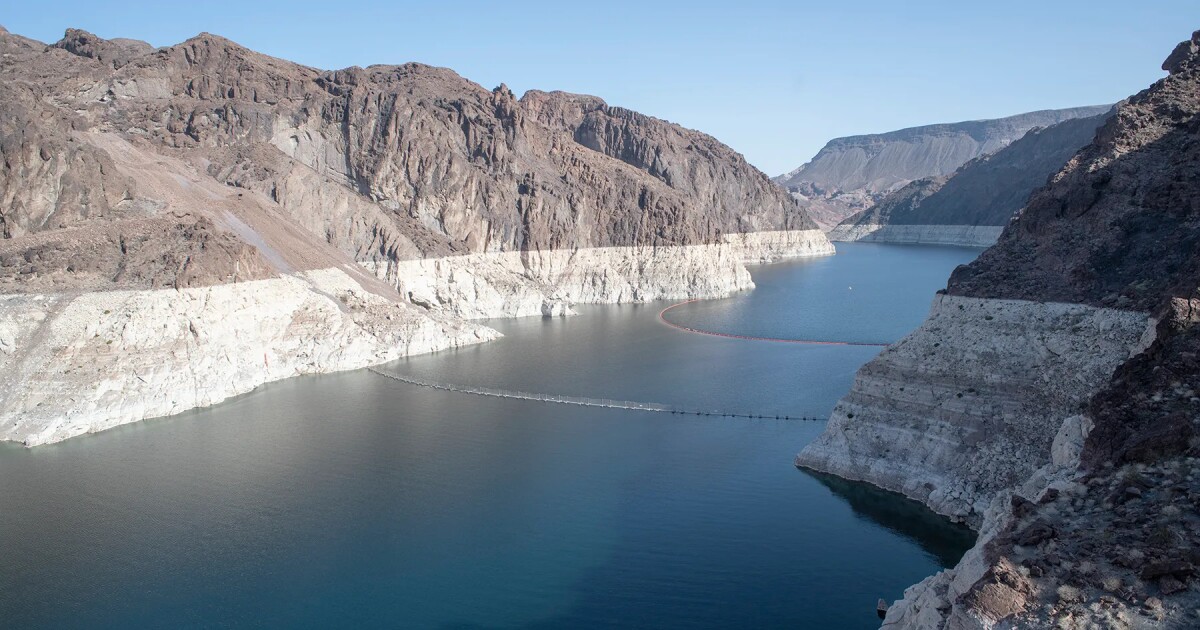
The management of water resources in the Colorado River has reached a critical juncture, notably impacting Arizona, which could face drastic cutbacks. As negotiations among the states remain unresolved, the federal government is warning of possible reductions in water allocations, with Arizona potentially seeing cuts as high as 77%. In contrast, Nevada may only reduce its share by 6%, and the other five states are predicted to be unaffected.
Efforts to Reach a Solution
In light of these looming cuts, Arizona has joined forces with California and Nevada in proposing an alternative approach. Their plan suggests implementing water reductions across the Lower Basin states sustainably over the next three years, primarily through voluntary conservation strategies, potentially supported by federal funding.
Tom Buschatzke, the director of Arizona's Department of Water Resources, noted, “We looked at how Lake Powell and Lake Mead would be impacted from an elevation standpoint and tried to cover as many hydrologic scenarios as possible. It’s not a guarantee, but it’s a robust level of protection.”
However, this proposal has faced opposition from the Upper Basin states of Colorado, Utah, New Mexico, and Wyoming, who argue it fails to account for current snowpack conditions. These states express concern that the proposed reductions could jeopardize the sustainability of both dams and lead to the depletion of reservoirs like Lake Mead and Lake Powell.
Chuck Cullom of the Upper Colorado River Commission stated, “We … have depleted the storage in those reservoirs to the brink of being empty. We are overspending our bank account and the bank account is almost empty. So, legal theories, everyone has one. Math is indisputable.”
Common Ground Amidst Crisis
Despite the disagreements, there is a shared understanding that the extended drought severely affects water availability, while population growth continues to escalate. Jennifer Pitt, who oversees the Colorado River program for the National Audubon Society, remarked on the critical situation, saying, “In my 25 years on the Colorado River, I haven’t seen things this bad. … We have 19th century law, 20th century infrastructure, and 21st century hydrology and water demand — and it’s not lining up very well.”
This ongoing megadrought further complicates matters, risking not only environmental health but also impacting economies and energy production from major facilities like the Glen Canyon and Hoover dams.
Investments in Water Management
The Senate Committee on Energy and Natural Resources is gearing up for a hearing on this pressing issue, coinciding with a recent announcement by the Bureau of Reclamation of a $52 million project to install new turbines at Hoover Dam. These turbines are being designed to function under the low water conditions of Lake Mead. In 2022, Lake Mead recorded its lowest level at 1,041 feet, a historic record since the reservoir filled in 1941. As of June, the lake's level was approximately 1,048 feet; however, if this drops to 895 feet, it will reach "dead pool" status, preventing any further downstream flow for electricity generation.
Lake Powell has similarly seen significant declines, dropping from 3,680 feet in 2000 to 3,527 feet, with a critical threshold of 3,370 feet marking its own dead pool status.
Arizona's Water Dependence
Arizona's reliance on the Colorado River for 36% of its total water supply is compounded by significant groundwater depletion. According to the Arizona Department of Water Resources, the state also uses in-state rivers and reclaimed water. Fertility of the agricultural sector could be jeopardized due to accelerated groundwater loss, with NASA satellite findings revealing reductions of 27.8 million acre-feet in aquifers between 2002 and 2024.