

Arizona GOP Supports Major Cuts to Foreign Aid and Public Broadcasting

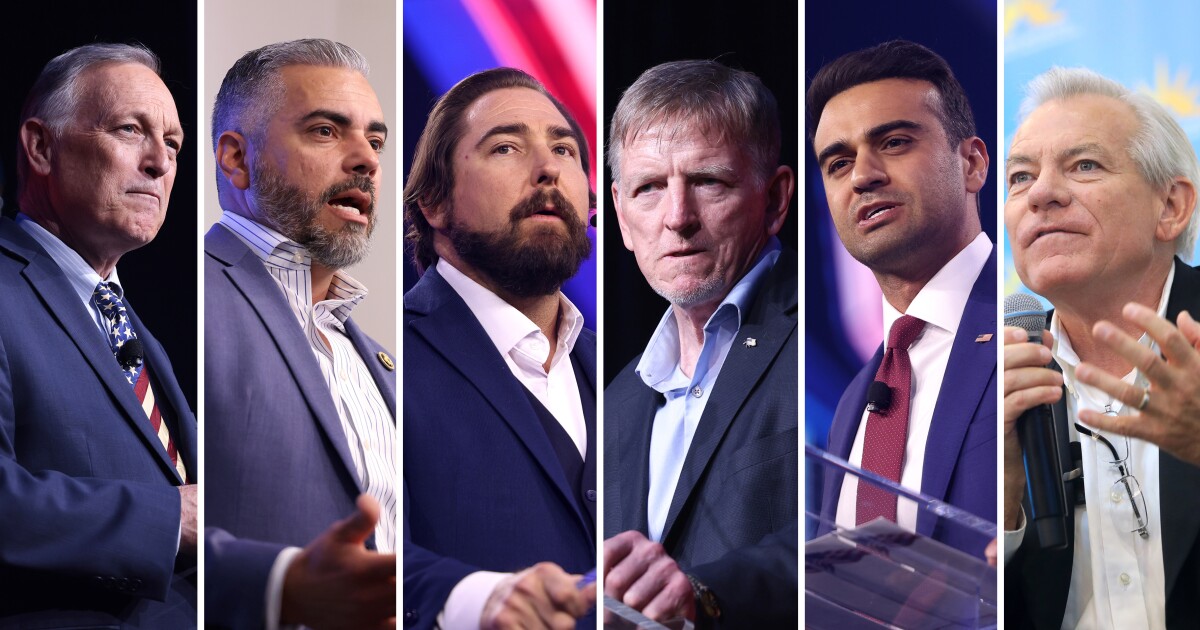
Arizona Republicans Endorse Major Spending Cuts Proposed by Trump
In a pivotal decision, Arizona's Republican congressional representatives have backed President Donald Trump’s plan to eliminate billions in funding for foreign aid and public broadcasting. This initiative came as part of a rescission package that recently passed through the U.S. House with a narrow 216-213 vote, aiming for a total budget decrease of $9 billion, which includes $8 billion in foreign aid and $1.1 billion for the Corporation for Public Broadcasting over the next two years. This package is set to affect national networks such as NPR and PBS as well as their local affiliates.
The cuts to foreign aid encompass various programs, including those focused on democracy promotion, disaster relief, economic development in emerging nations, and refugee assistance. This legislative outcome is seen as a success for the Trump administration, reflecting its policy direction of reducing federal spending.
Arizona Congressman Abe Hamadeh expressed his approval of the measure, portraying it as a step towards eliminating what he describes as “wasteful spending” to prioritize domestic interests. In a social media post, he emphasized his commitment to his constituents to advocate for fiscal responsibility.
On the other side of the aisle, Democratic representatives have raised concerns regarding these funding cuts. Congressman Greg Stanton argued that they undermine crucial support systems and the United States' ability to project influence globally, especially in the context of economic rivalry with countries like China. “We need to be building good, strong relationships around the globe,” he stated.
In a different perspective on the proposed cuts, Rep. Paul Gosar communicated through email that the reductions address government inefficiencies, a viewpoint that resonates within the GOP. He referred to the initiative coming from the Department of Government Efficiency, which was previously led by Elon Musk.
The decision to cut the Corporation for Public Broadcasting funding is driven by claims of liberal bias in platforms like NPR and PBS. Representative Andy Biggs expressed this sentiment in a tweet, asserting that the move is a necessary measure against what he perceives as partisan bias in taxpayer-funded media.
Critics have pointed out the repercussions of these funding reductions on local public media outlets, particularly in rural regions where such stations heavily depend on federal support. Senator Ruben Gallego voiced his concerns about the potential negative impacts, noting the risk of local stations shutting down in areas lacking substantial corporate sponsorship or donations. “What happens in rural travel areas that don’t have big corporations?” he asked, alluding to the challenges these communities face.
Although federal funding to public broadcasters is relatively modest, it plays a significant role in sustaining numerous local entities. An analysis conducted by The New York Times indicates that the proposed cuts could threaten the existence of 37 television and 78 public radio stations, possibly leading to their closure.
In light of these developments, Senator Mark Kelly introduced an amendment aimed at preserving a portion of the public media funding, though it was not successful. He highlighted the critical nature of these services in rural areas, specifically for educational and emergency information purposes, asserting, “Do we want an educated population? If we do, then this is a small investment.”
EDITOR'S NOTE: KJZZ receives community grants from the Corporation for Public Broadcasting.