

Trump's National Guard Deployments Ignite Controversy Across America

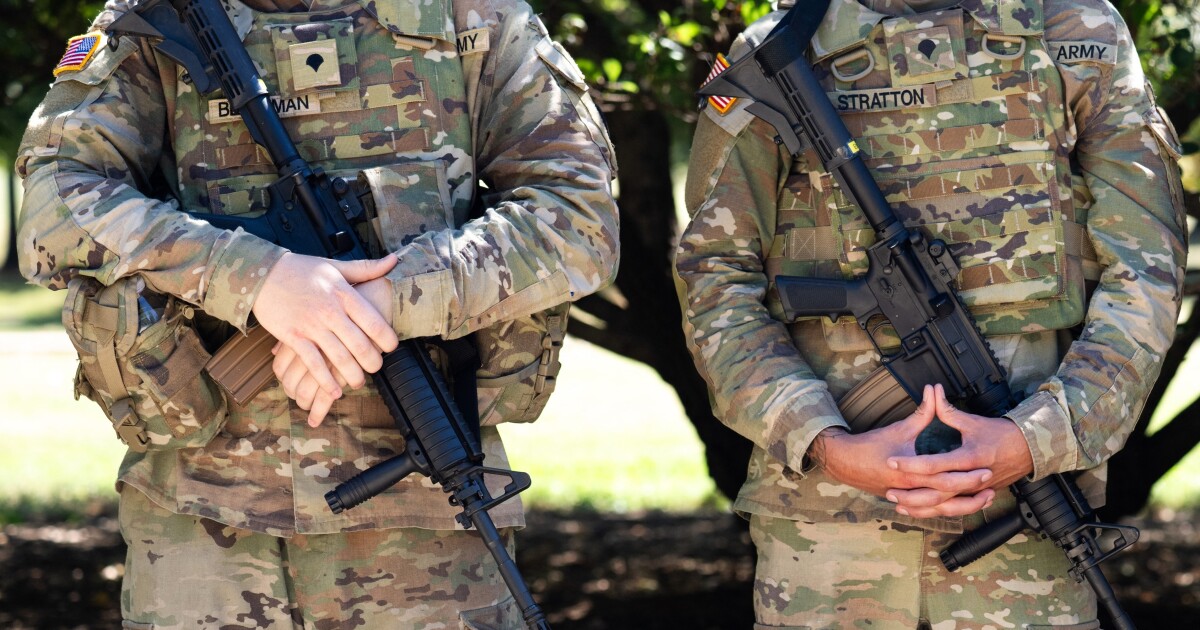
The deployment of National Guard troops by the Trump administration has ignited diverse reactions across the United States. While some cities welcome the presence of these troops as a means to combat crime, others have raised concerns through protests and legal challenges. The initiative seeks to address perceived crime spikes in selected urban areas.
Deployment Overview
In the past months, several U.S. cities have seen the arrival of National Guard troops. In June, a notable troop presence was established in Los Angeles, with Washington, D.C. following suit in August. Future deployments are anticipated, including the federal task force planned for Memphis, Tennessee; however, the specifics about National Guard involvement were not confirmed by Attorney General Pam Bondi.
Illinois Governor JB Pritzker has expressed intentions to station 100 troops in Chicago, while the Oregon National Guard is preparing to provide 200 troops in Portland as reported by Oregon Public Broadcasting. In response to the rising crime rates in Louisiana, Governor Jeff Landry has requested up to 1,000 troops for New Orleans and Baton Rouge. Additionally, Missouri Governor Mike Kehoe has authorized the use of the state National Guard to assist at ICE facilities following a request from the Department of Homeland Security.
President Trump has mentioned Baltimore as a possible location for troop deployment, yet Maryland Governor Wes Moore has opposed this, opting instead to reinforce support for local law enforcement with additional state resources, as highlighted in a statement.
Legal Considerations
The deployment of National Guard troops raises important legal questions, primarily revolving around the Home Act Rule, which allows presidential oversight of the National Guard in Washington, D.C. This rule legitimizes the organization's presence in the capital, contrasting with the more restrictive Posse Comitatus Act, which limits military involvement in domestic law enforcement actions without Congressional consent. A recent ruling by U.S. District Judge Charles R. Breyer stated that the deployment in Los Angeles violated this act, although this ruling applies solely to California.
In cases such as Oregon, attempts have been made to secure restraining orders against troop deployments, arguing there is an overreach by the federal government. However, in Republican-led states, legal analysts suggest that the deployments may face less opposition.
Rosa Brooks, a law professor at Georgetown University, noted, “If the governor wants to invite troops from other states in — it may or may not be pointless — but legally speaking it’s not necessarily problematic, as long as they’re respecting people’s constitutional rights,” during a discussion with NPR.
Political and Public Response
The partisan divide is stark in the responses to the National Guard deployments. Democratic governors, including Gavin Newsom of California, JB Pritzker of Illinois, and Tina Kotek of Oregon, have largely criticized the initiative. Newsom has characterized Trump’s deployment orders as “illegal” and “immoral,” while Pritzker has voiced opposition on social media, calling for an end to the military presence disrupting communities.
Conversely, governors from the Republican party have shown support for the federal