

Trump's 15% Tariff Deal with Japan Aims to Boost US Economy and Jobs
- Better American Media

- Jul 23, 2025
- 2 min read
Updated July 23, 2025 at 4:12 PM EDT
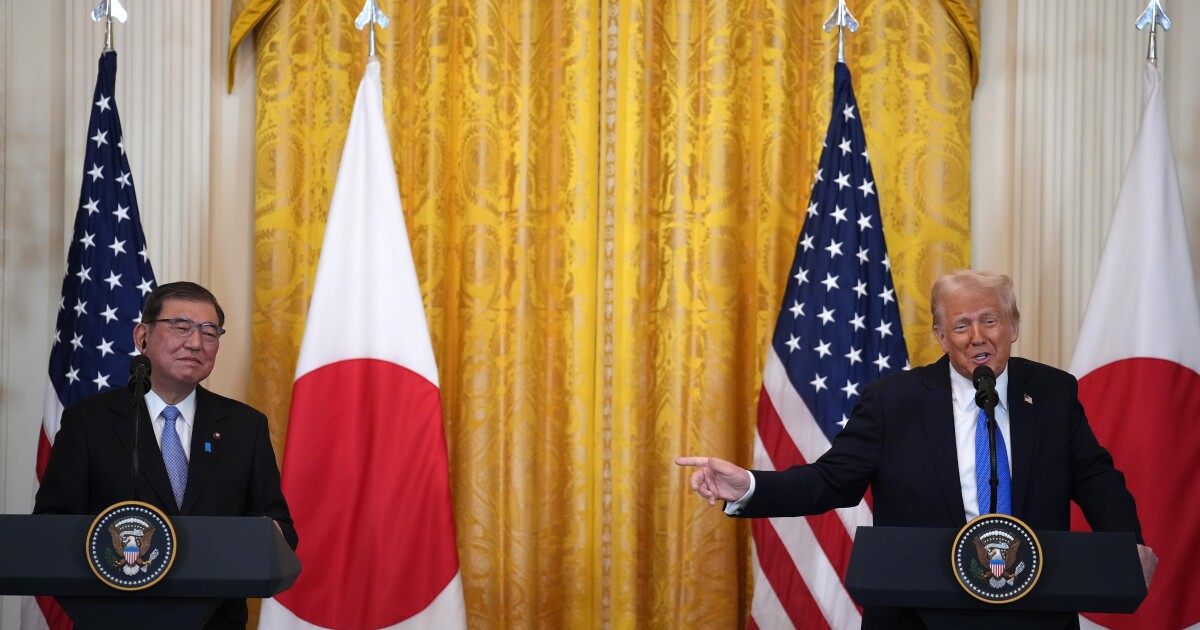
In a significant move for international trade relations, the United States and Japan have inked a new agreement that introduces a uniform reciprocal tariff rate of 15%. This arrangement, announced by President Trump on social media, is expected to stimulate Japanese investment in the United States, amounting to an impressive $550 billion across various sectors including automotive and agriculture.
Trump characterized the trade deal as groundbreaking, predicting it will generate “Hundreds of Thousands of Jobs — There has never been anything like it.” Japanese Prime Minister Shigeru Ishiba echoed the sentiment, emphasizing that the agreement holds mutual advantages for both nations.
The backdrop for this agreement includes a striking $70 billion trade deficit that the U.S. recorded with Japan in 2024, as noted by USTR data. Notably, the new tariff rates are considerably lower than the previously proposed rates of 24% and 25% that were set to be imposed on August 1.
Efforts to solidify trade connections extend beyond Japan, with Trump negotiating comparable tariff reductions with countries like the Philippines, Indonesia, and Vietnam. The White House indicates that Japan's investment will cover a broad spectrum of industries, notably energy infrastructure, semiconductor manufacturing, and pharmaceuticals, with the U.S. anticipated to retain 90% of the gains from these investments, thus benefiting American labor and communities.
Part of the agreement also includes Japan’s commitment to purchase 100 Boeing aircraft and to ease restrictions on Japanese imports of U.S. vehicles, which marks a pivotal opportunity for American automakers. These developments come after direct talks between Trump and Japanese officials regarding tariffs, aiming to establish a trade framework that could serve as a model for engagements with other nations.
Context of the Agreement
The announcement of this trade deal follows a turbulent political period for Ishiba, whose political party faced challenges in recent elections that have led to calls for his resignation. Earlier in 2025, Trump had threatened to implement a 24% tariff on Japanese goods, which Ishiba had referred to as a “national crisis”. Despite his early attempts to foster a strong partnership post-inauguration, Ishiba's efforts to avoid such tariffs were ultimately insufficient.
In discussions earlier this year, Ishiba expressed that potential tariffs were “extremely regrettable and disappointing,” assuring lawmakers that Japan should not bent excessively for a swift resolution. Additionally, Japan contemplated leveraging its substantial holdings of U.S. government debt and its defense purchases as bargaining chips in the negotiations, though it eventually opted to separate these issues from trade talks.
Trump has historically critiqued Japan for benefitting disproportionately from the U.S. trade and defense arrangements, viewing it as a wealthy ally that does not equally share the benefits of their agreements.
Copyright 2025 NPR