

Supreme Court Decision Strengthens GOP's Redistricting Power for 2026

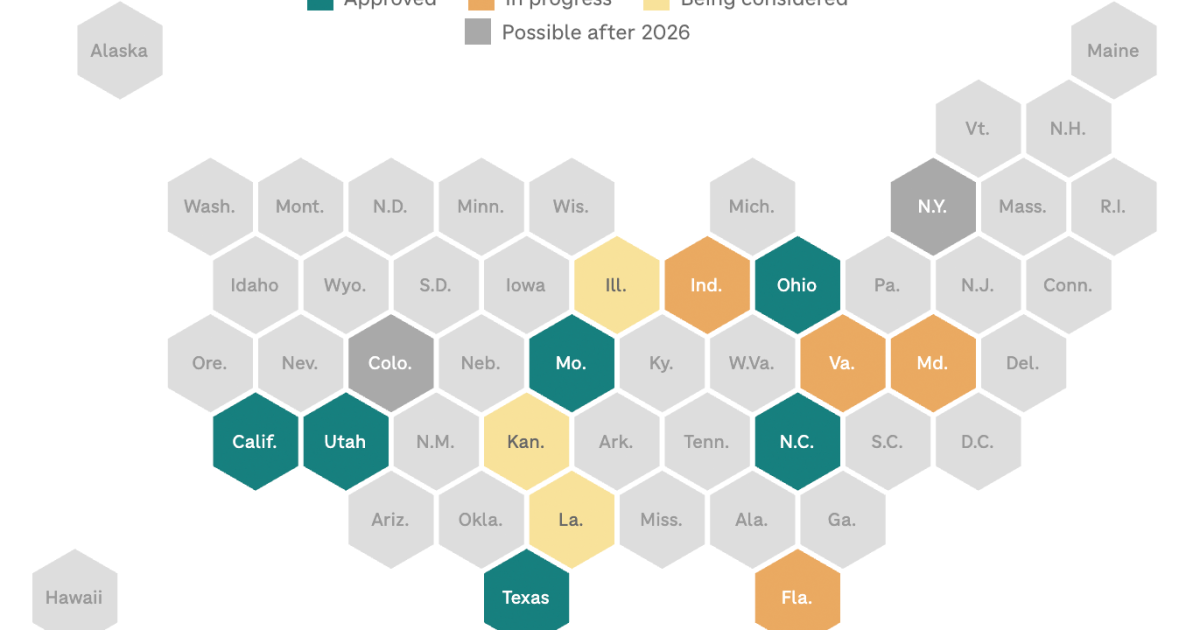
The landscape of American politics could shift dramatically in the lead-up to the 2026 elections, following a pivotal Supreme Court ruling that supports Texas Republicans in their redistricting efforts. This decision may end up giving the GOP significant electoral advantages amid ongoing disputes over district maps across the nation. The Supreme Court's conservative majority has permitted Texas's newly drawn congressional map to move forward, despite previous findings by a lower court which indicated possible racial gerrymandering. This ruling may enable the Republican Party to potentially gain up to five additional congressional seats, enhancing their already fragile majority in the House of Representatives. At present, the House is narrowly divided, consisting of 220 Republicans and 213 Democrats. Given the historical trend of midterm elections generally resulting in losses for the incumbent president's party, the current configuration is particularly crucial for the GOP's legislative agenda and future investigations. Looking ahead, projections show that the contentious redistricting processes across various states could shift between 12 to 14 seats toward Republican candidates, while Democrats are expected to regain around nine seats. However, these shifts remain contingent on ongoing legal challenges and political maneuvers. Statewide Redistricting Debates In Indiana, for instance, legislative discussions around redistricting are gaining steam, and Missouri faces a potentially delayed redistricting schedule as petitioners work to gather signatures for a public referendum. These state-level actions are indicative of the broader nationwide efforts to influence congressional representation. The Trump Effect on Redistricting The redistricting process typically follows the decennial census, which recalibrates congressional seats according to shifts in population. Nevertheless, the initiatives spearheaded by former President Trump have intensified competition among states over the draw of these maps, reminiscent of earlier political struggles. This past summer, political tensions surged in Texas when Trump called for a redistribution that would favor Republican candidates. This prompted a two-week walkout by Democratic lawmakers who argued against a plan they believed would diminish the electoral power of Black and Latino communities. Meanwhile, California's Democrats responded by quickly organizing a special election aimed at approving a new map that could potentially shift five Republican-held districts to their control. GOP Dominance in Redistricting The Republican Party's advantage in this redistricting phase is partially due to its control of an extensive number of state legislatures. In contrast, many Democratic-led states are constrained by legal frameworks that limit partisan gerrymandering or mandate the use of independent commissions to delineate district lines. Republican Governor Mike Braun and Lieutenant Governor Micah Beckwith in attendance at a pro-redistricting rally in Indiana. In Virginia, the Democratic-controlled legislature has voted to conduct a special election for a constitutional amendment on redistricting, which could potentially add two or three seats to their tally. In Maryland, Governor Wes Moore has set up a commission to develop redistricting recommendations, though the state currently holds just one Republican seat. Furthermore, in Florida, Governor Ron DeSantis is advocating for a redistricting effort that could yield an additional five seats for the GOP. However, state laws against partisan gerrymandering and restrictions from the federal Voting Rights Act may pose challenges to achieving such gains. Notably, the Supreme Court is currently reviewing aspects of the Voting Rights Act, which may affect the legality of certain red