

Supreme Court Affirms Sanctions Against Lawyers for Frivolous Election Case

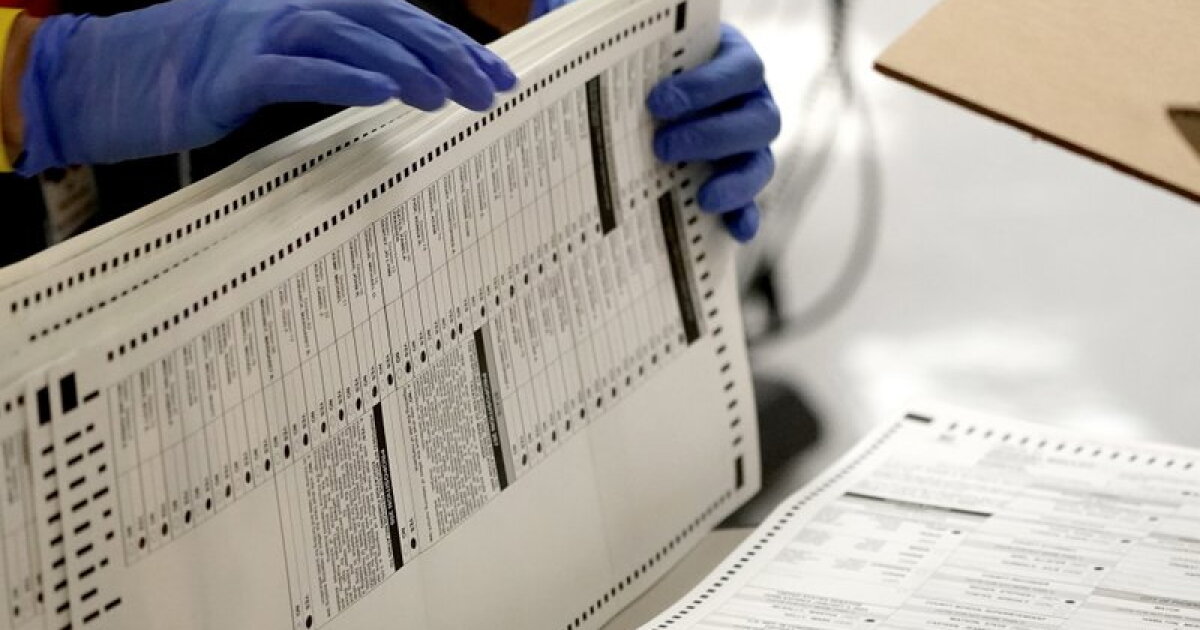
Supreme Court Decision Affirms Sanctions for Election Machine Challenge
The U.S. Supreme Court has upheld financial sanctions against a lawyer who represented Kari Lake and Mark Finchem in their challenge of Arizona's voting machines. This ruling affirms a lower court's determination that the lawsuit was without merit and labeled as "frivolous."
Andrew Parker, the attorney involved, faced penalties after U.S. District Court Judge John Tuchi concluded that the claims regarding the voting machines' reliability were not backed by solid evidence, describing the lawsuit as politically motivated due to its timing just ahead of the 2022 elections.
In his ruling, Judge Tuchi emphasized the need to discourage similar future lawsuits, declaring, “It is to make clear that the court will not condone litigants … furthering false narratives that baselessly undermine public trust at a time of increasing disinformation about, and distrust in, the democratic process.”
The 9th Circuit Court of Appeals upheld the lower court's penalties, reinforcing the view that not only was the lawsuit baseless, but it also misled the public, thereby generating unwarranted fears about election integrity.
Both Lake and Finchem were candidates in the 2022 elections—Lake for governor and Finchem for secretary of state—and they had advocated for a manual counting of paper ballots, asserting it as the only secure voting method. However, their claims were dismissed, and ultimately, they lost their respective campaigns.
Arizona Secretary of State Adrian Fontes assured voters that mail voting would remain unaffected by the Supreme Court's decision. Read more.
Anticipated following the 9th Circuit's ruling, the Supreme Court's rejection of the appeal highlighted differing opinions among the appellate judges. Judge Patrick Bumatay expressed concern over the potential implications of such sanctions on legal advocacy, stating, “By sanctioning parties and their lawyers for bringing debatable, long-shot complaints, courts risk chilling legal advocacy and citizens raising ‘questions’ under the guise of defending the rule of law.”
Criticism was directed at the attorneys for not conducting thorough research before filing the lawsuit. Judge Tuchi remarked that had they undertaken a reasonable investigation, they would have found publicly available information that contradicted their claims. He noted, “Thus, plaintiffs either failed to conduct the reasonable factual and legal inquiry required (under court rules), or they conducted such an inquiry and filed this lawsuit anyway.”
In the aftermath of losing the 2022 elections, Lake and Finchem have taken different political trajectories. Lake attempted an unsuccessful run for the U.S. Senate following her gubernatorial defeat, while Finchem moved on to win a seat in the state Senate representing Prescott.
This decision emphasizes the judiciary's firm stance against unfounded election-related lawsuits and highlights the ongoing challenge of preserving public trust in electoral systems.