

Spirit Airlines Shuts Down: What It Means for Your Next Flight and Your Wallet

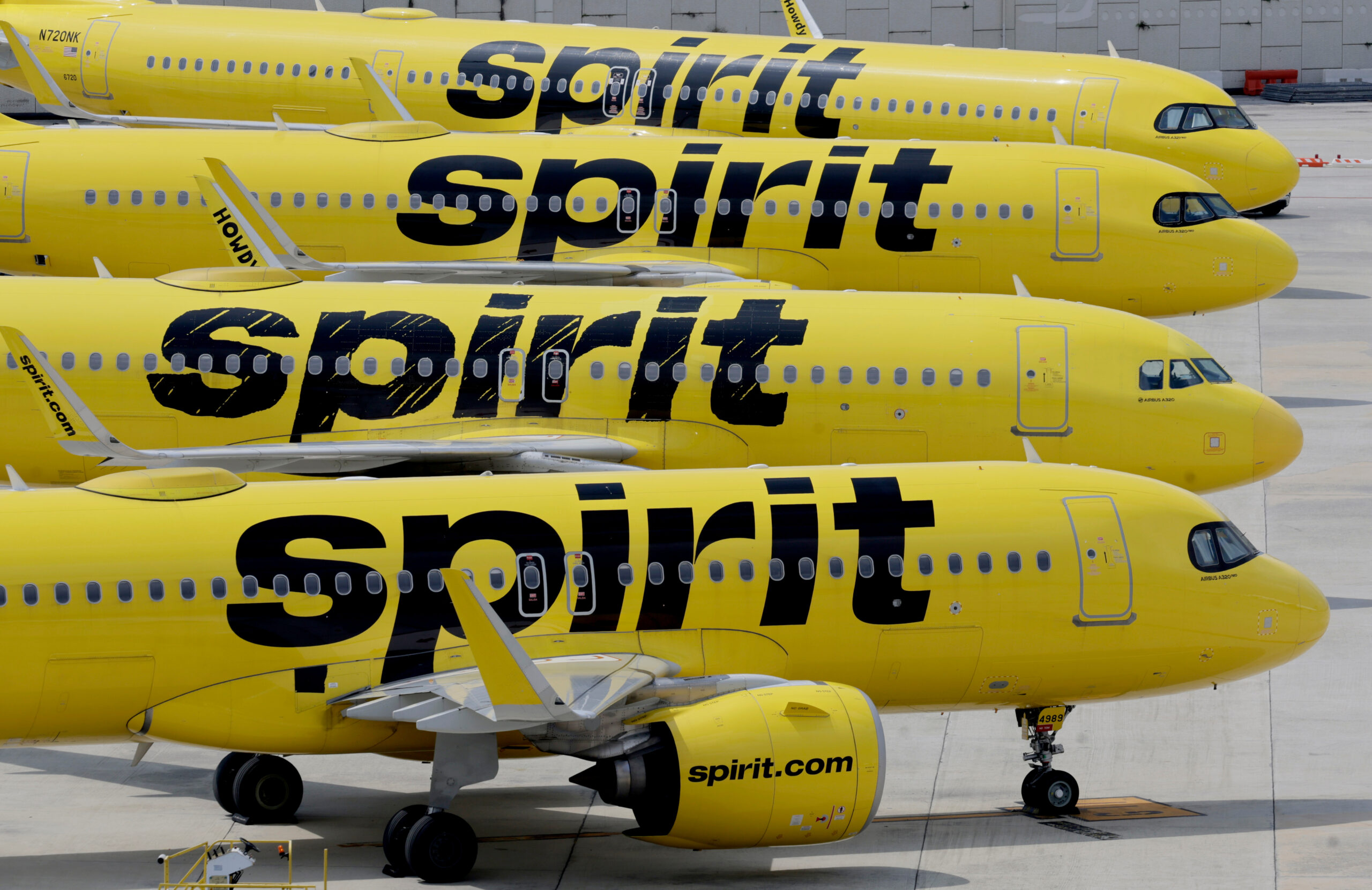
For families watching every dollar, Spirit Airlines was often the difference between a vacation that happened and one that didn't. Now, after 34 years of filling budget-conscious travelers' seats with some of the lowest fares in the sky, Spirit is gone — and the ripple effects are already being felt at airports across the country.
The airline announced this week that it has begun an "orderly wind-down" of its operations, effective immediately. Every flight has been canceled, customer service lines have gone dark, and approximately 17,000 jobs are now in jeopardy. The sudden closure caught passengers, crew members, and airport workers almost entirely off guard.
What Caused Spirit to Collapse?
Spirit had already been struggling financially heading into this year, but a surge in jet fuel costs proved to be the breaking point. According to the airline's chief financial officer Fred Cromer, Spirit absorbed nearly $100 million in additional fuel expenses between March and April 30 alone — costs tied to rising oil prices connected to tensions in the Strait of Hormuz, a critical global shipping channel for oil supplies.
Tad DeHaven, a policy analyst at the Cato Institute, a libertarian think tank, said that several policy decisions played a role in Spirit's downfall. He pointed specifically to decisions surrounding military action against Iran as "bad foreign policy," arguing that the resulting disruption pushed jet fuel prices higher at a time when Spirit could least afford it. "They were already in trouble," DeHaven said, describing the situation as "a compounding effect in terms of policy."
A Rescue Deal That Fell Apart
The Trump administration explored a potential government rescue package worth approximately $500 million for Spirit. President Donald Trump said as recently as Friday afternoon that his team had presented the airline with a "final proposal" for a taxpayer-funded takeover. However, the deal ultimately collapsed following opposition from a group of creditors and some Republican lawmakers.
Cromer confirmed in a court declaration that the company was told late last week that the potential financing "was no longer an available option." Without that lifeline, Spirit had no path forward.
Passengers Left Stranded at the Gate
Spirit quietly wound down flight operations around 3 a.m. Saturday, timed so that no aircraft would be caught mid-flight and so that crew members stationed away from their home bases would have time to arrange overnight accommodations. The final Spirit flight touched down at Dallas Fort Worth International Airport, having arrived from Detroit Metropolitan Airport.
The shutdown created immediate chaos for travelers who had no warning. At Atlanta's Hartsfield-Jackson airport, departure boards were still listing five Spirit flights as "on time" Saturday morning — even though the airline had already ceased operations.
Taylor Nantang had driven down from Tennessee with her husband and four children, planning to catch a last-minute flight to Miami. She found out at the airport that the entire airline had shut down. "What!?" she exclaimed. "So the whole airline at every airport is out of business? Oh my, that's crazy."
Joshua Sigler had purchased his Spirit ticket just the day before, also heading to Miami. He said he received zero communication from Spirit before arriving at the airport. Looking back on his experiences with the carrier, he kept it brief: "They get you there. It was cheap."
Employees Blindsided Too
Workers found out about the shutdown the same way many passengers did — through social media rumors and late-night website checks. Former Spirit flight attendant Freddy Peterson had just landed in Newark around 11 p.m. Friday on a packed Spirit flight carrying more than 200 passengers. Nothing about the flight suggested anything was wrong. He set an alarm for 3 a.m. Saturday to check the company's website after rumors began circulating online, and that's when the reality set in.
Delta Air Lines flew Peterson back to Atlanta on Saturday morning. "I'll probably do the boo-hoo crying and all that other stuff once I get in my car," Peterson said.
Peterson, who had worked for Spirit for a decade, said the airline had "done wonders" for him personally. While he pushed back against Spirit's reputation for poor service and disorder, he was openly critical of how management handled the airline's final days — including a promised employee town hall that was canceled without any explanation.
What Affected Travelers Should Do Now
Travelers who purchased their tickets directly through Spirit are covered by a reserve fund the airline set aside for refunds, according to Secretary Duffy. Passengers who booked through third-party vendors — such as travel agents or booking sites — will need to seek refunds directly from those providers.
Several major airlines are stepping in to help. Secretary Duffy said United, Delta, JetBlue, and Southwest were offering $200 one-way fares for travelers who can show a Spirit confirmation number and proof of purchase, for a limited time. Airlines were also reported to be offering preferential hiring consideration for displaced Spirit employees.
Spirit said it was working to return more than 1,300 crew members to their home bases. The company also made clear that while refunds would be processed, Spirit would not assist customers in rebooking travel on other airlines.
Higher Fares Could Be Coming for Budget Travelers
Spirit's exit from the market is expected to hit budget travelers the hardest, especially in cities where the airline had a strong foothold — including Las Vegas, Fort Lauderdale, and Orlando. Labor unions representing Spirit's pilots, flight attendants, and ground workers had warned publicly that if the airline failed, reduced competition in the industry would likely push airfares higher across the board.
The data shows just how much Spirit had already shrunk before the final collapse. The airline carried roughly 1.7 million domestic passengers in February — about half a million fewer than during the same month the previous year, according to aviation analytics firm Cirium. Available seat capacity this month was approximately half of what it was in May 2024.
As part of the wind-down, Spirit is seeking court approval to sell off its aircraft, spare engines, and other assets. The company plans to keep around 150 employees initially to manage the process, eventually reducing that number to 40. Retaining those workers is expected to cost at least $10.7 million.
"We are proud of the impact of our ultra-low-cost model on the industry over the last 34 years and had hoped to serve our guests for many years to come," Spirit said in its closing announcement.