

Progressive Democrats Shape the Future of Michigan Politics Ahead of Midterms

Progressive Democrats Seek Broader Appeal in Michigan Ahead of Midterms
As the midterm elections draw closer, Michigan's Democratic Party is looking to expand its reach, with Ann Arbor emerging as a potential guide for broader electoral strategies. The city's progressive Democrats are striving to connect with a more diverse voter base, while their Republican counterparts criticize their approach as overly radical.
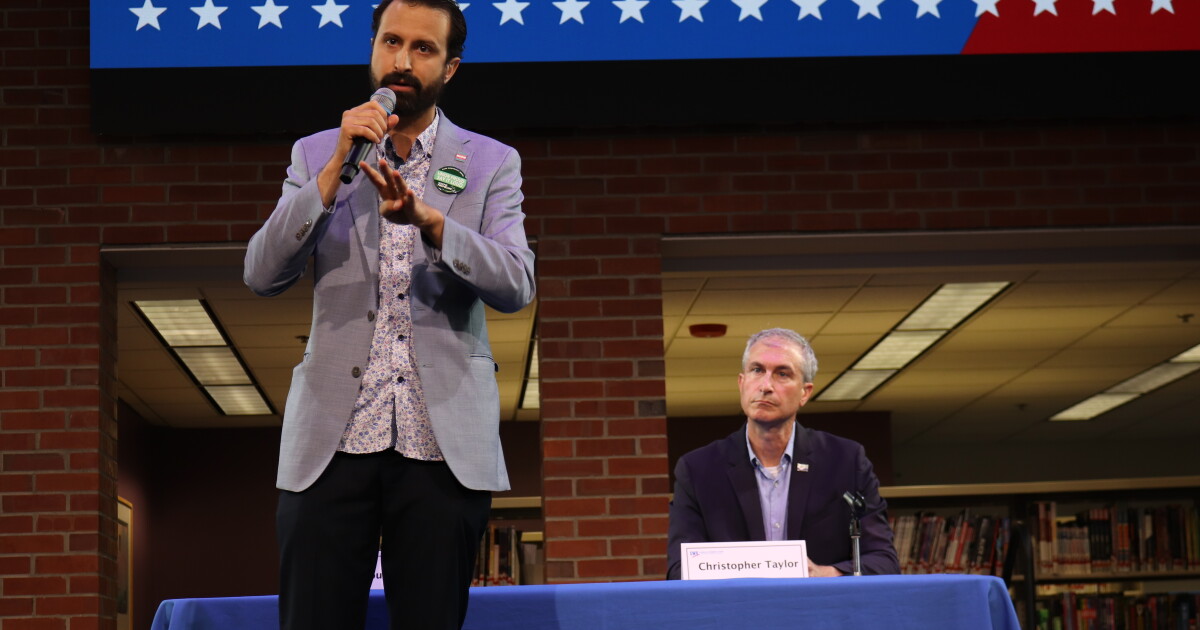
Yousef Rabhi, who recently won the Democratic nomination for mayor of Ann Arbor, expressed his belief in the city's unique status within the state, stating, “I’ve always believed that Ann Arbor is uniquely positioned in the state to be a leader sometimes, we feel like we’re an island surrounded by, you know, the rest of the county, the rest of the state.” Rabhi, a self-described democratic socialist, succeeded in defeating incumbent Mayor Chris Taylor and is part of a growing faction of progressive Democrats who are challenging established norms within the party.
This surge in progressive politics is noticeable beyond Ann Arbor. For instance, in Michigan’s Seventh Congressional District, William Lawrence triumphed over more moderate candidates and is set to confront Republican Tom Barrett in the upcoming elections. Additionally, in the Senate primary, Abdul El-Sayed, who also embodies progressive values, surpassed centrist contender Haley Stevens, raising questions about the viability of progressive candidates in a state known for its tightly contested elections.
However, skepticism remains among some political figures. Jason Rogers, the Washtenaw County GOP Chair and a candidate for District 15 in the State Senate, remarked, “Republicans remain the real big-tent party for those left behind by the Democrats’ radical turn.”
Progressive movements, such as the Democratic Socialists of America, promote ideas like the Green New Deal and Medicare for All, initiatives that are reportedly resonating with voters. A Pew Research study reveals that about one-third of Democrats express support for candidates identifying as democratic socialists. Furthermore, a CNBC poll indicates that nearly half of young adults view democratic socialism in a positive light.
Rabhi suggests that the growing appeal of progressive politics is driven by a desire for clear, future-oriented visions from leaders. He stated, “What we’re seeing right now is a moment in the Democratic Party where you know, folks are demanding better from their leaders.”
Despite his long mayoral tenure, Chris Taylor attributes his electoral defeat to various factors and not solely a shift in voter preferences. He pointed out, “Certainly elements within the Democratic Party are increasingly sensitive to corporate power, but that’s always been a constituency.”
Concerns among moderate Democrats linger regarding whether Rabhi’s progressive policies could alienate a broader electorate. Nonetheless, Rabhi remains optimistic about his campaign, claiming that advocating for affordability and countering corporate power aligns with core American values. “Frankly, I think that message resonates whether you’re a Democrat, or Independent, or a Republican,” he asserted.
In the ongoing Senate race, El-Sayed, who does not identify as a socialist, is currently leading Republican Mike Rogers, according to polling data from 270ToWin, with an average lead of five points.
Rabhi is actively working to support other Democrats in their campaigns, emphasizing the need to unite the party across Michigan. He stated, “This election isn’t just about supporting, you know, the progressive candidates that won their primaries, but it’s also supporting, you know, the whole Democratic slate.”