

Pope Leo XIV and President Trump Clash Over Peace Message
- Better American Media

- Apr 15
- 3 min read
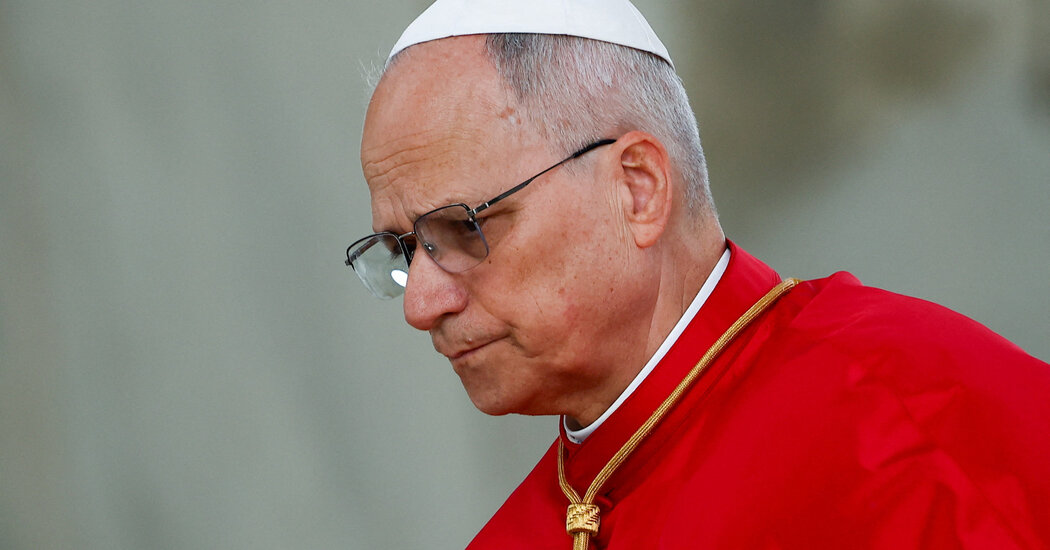
A public dispute between President Donald Trump and newly elected Pope Leo XIV has drawn widespread attention after Trump criticized the Catholic Church's leader for delivering a message of peace during one of Christianity's holiest seasons. The exchange has raised questions about the boundaries between religion and politics — and what role faith leaders should play in commenting on global conflicts.
During Palm Sunday weekend, Pope Leo XIV delivered remarks calling Jesus the "King of Peace" and warning that God "does not listen to the prayers of those who wage war." The pope acknowledged the suffering of civilians in Ukraine and Gaza, described the current global landscape as a "third world war in pieces," and said Trump's public threats against Iran were "truly unacceptable." These comments came while Trump was publicly raising the possibility of what he described as the potential "eradication" of a "whole civilization" in Iran.
Trump responded on social media, writing, "I don't want a Pope who criticizes the President of the United States, because I'm doing exactly what I was elected, IN A LANDSLIDE, to do." He called Pope Leo "weak" and accused him of being aligned with the "Radical Left." Trump also suggested, without providing evidence, that the Vatican had selected an American pope as a diplomatic strategy to influence his administration — a claim that has not been supported by any credible reporting.
Vice President JD Vance added his own criticism, telling the pope to "stick to matters of morality." That comment prompted some observers to note that war, human dignity, and the value of human life are widely considered core moral issues by religious institutions across traditions.
Who Is Pope Leo XIV?
Pope Leo XIV, born Robert Francis Prevost, became the first American-born pope in history when he was elected on May 8, 2025. Before ascending to the papacy, Prevost spent years serving as a bishop in Peru, working closely with economically marginalized communities. When Russia invaded Ukraine in 2022, he publicly described it as an imperialist act of conquest — a position he stated on Peruvian television, saying he believed the Church had a responsibility to clearly name injustice.
Earlier in 2025, while still serving as a cardinal, he shared an article challenging a position JD Vance had expressed about Christian love being something that should be prioritized based on national origin or proximity. The article's headline read: "JD Vance is wrong: Jesus doesn't ask us to rank our love for others." The theological argument behind that piece draws directly from the Parable of the Good Samaritan and the broader Christian instruction to love one's neighbor.
Since taking office, Leo has chosen to address the public primarily in Italian and Spanish rather than English — a decision widely interpreted as a signal that he views himself as a leader for the global Catholic community, not as a representative of any single nation.
The Pope's Response
Speaking with reporters aboard a papal flight to Africa, Pope Leo XIV responded to the criticism in measured terms. He did not express anger toward Trump or Vance, but he was direct about his intentions.
"To put my message on the same plane as what the president has attempted to do here," he said, "I think is not understanding what the message of the Gospel is. And I'm sorry to hear that, but I will continue on what I believe is the mission of the church in the world today."
He also addressed whether the criticism had changed his willingness to speak out.
"I'm not afraid of the Trump administration, or of speaking out loudly about the message of the Gospel, which is what the Church works for," he said.
The pope did not escalate the dispute or use the opportunity to attack Trump personally. He framed his position as a continuation of what he sees as the Church's fundamental mission — advocating for peace and the dignity of human life.
The conflict between the two figures highlights a long-standing tension between political authority and religious leadership. Faith leaders throughout history have spoken out against war and the treatment of vulnerable populations, sometimes at significant personal cost. Whether Pope Leo XIV's comments constitute appropriate moral leadership or inappropriate political interference is a question that Americans — particularly the roughly 70 million Catholics in the United States — are now weighing for themselves.