

Nursing Education Crisis: Demand Rises, Seats Scarce Amid Faculty Shortage

As the healthcare sector faces pressing demands, aspiring nurses find themselves navigating a complex landscape of limited educational opportunities. Among those pursuing a nursing career is Oscar Mateo, who transformed his experience as a leukemia patient into a commitment to care for others. Currently enrolled in a registered nursing program at Mt. San Antonio College, Mateo's journey underscores the broader challenges within nursing education in the U.S.
The Nursing Education Crisis
The United States is experiencing a striking contradiction: while the need for nurses is rapidly increasing, the ability of educational institutions to train new nurses is lagging significantly. In California—one of the states most impacted by this issue—nursing programs are unable to accommodate the influx of qualified applicants. In the 2022-23 academic year, only 34% of the 57,987 applicants for nursing programs were accepted, according to data from the California Board of Registered Nursing.
Moreover, this shortage reflects a national trend, where nearly 66,000 applicants for bachelor's and graduate nursing programs were turned away, as reported by the American Association of Colleges of Nursing. As of this year, California is looking forward to a nursing deficit projected to escalate from 40,790 to 61,490 nurses by 2035, according to the U.S. Department of Health and Human Services.
Challenges in Clinical Training
The preparation of nursing students hinges heavily on clinical training, yet this aspect is becoming increasingly competitive. According to Paul Creason, dean at Long Beach City College, the struggle for clinical placements is intensified by California state law which requires nursing students to complete a minimum of 500 direct patient care hours to graduate. In the last academic year, more than half of nursing programs faced acceptance issues for clinical placements, significantly hampering their ability to train students effectively.
Public and private institutions often find themselves at odds over available clinical spots. Some nursing colleges go as far as compensating for placements, which led to a newly enacted law in 2023 prohibiting such financial arrangements. However, the challenges of enforcement create uncertainty around the region’s nursing education framework.
Responsive State Initiatives
In response to the nursing shortage, state initiatives are underway to bolster educational resources. Efforts include increasing financial support for public nursing programs and legislation promoting collaboration with community colleges to expand clinical opportunities. A notable five-year, $60 million grant has been allocated specifically to enhance California’s nursing programs.
Yet, despite these efforts, institutions like Samuel Merritt University encounter challenges when attempting to expand their seats, particularly from public schools that dominate the nursing landscape. Following some advocacy, Samuel Merritt did manage to secure clinical placements outside of Sacramento to increase its program offerings.
Affordability and Accessibility
The issue of affordability remains a critical point in the nursing education debate. The cost for an associate degree at Long Beach City College stands at approximately $5,000, vastly more accessible compared to the nearly $148,000 required for a bachelor’s degree at West Coast University. This disparity raises questions about which institutions ought to receive prioritization in funding and placements.
Mateo, who was initially drawn to West Coast University for its open admissions, ultimately selected Mt. SAC because of its reputation for quality education and financial practicality.
Exploring Innovative Solutions
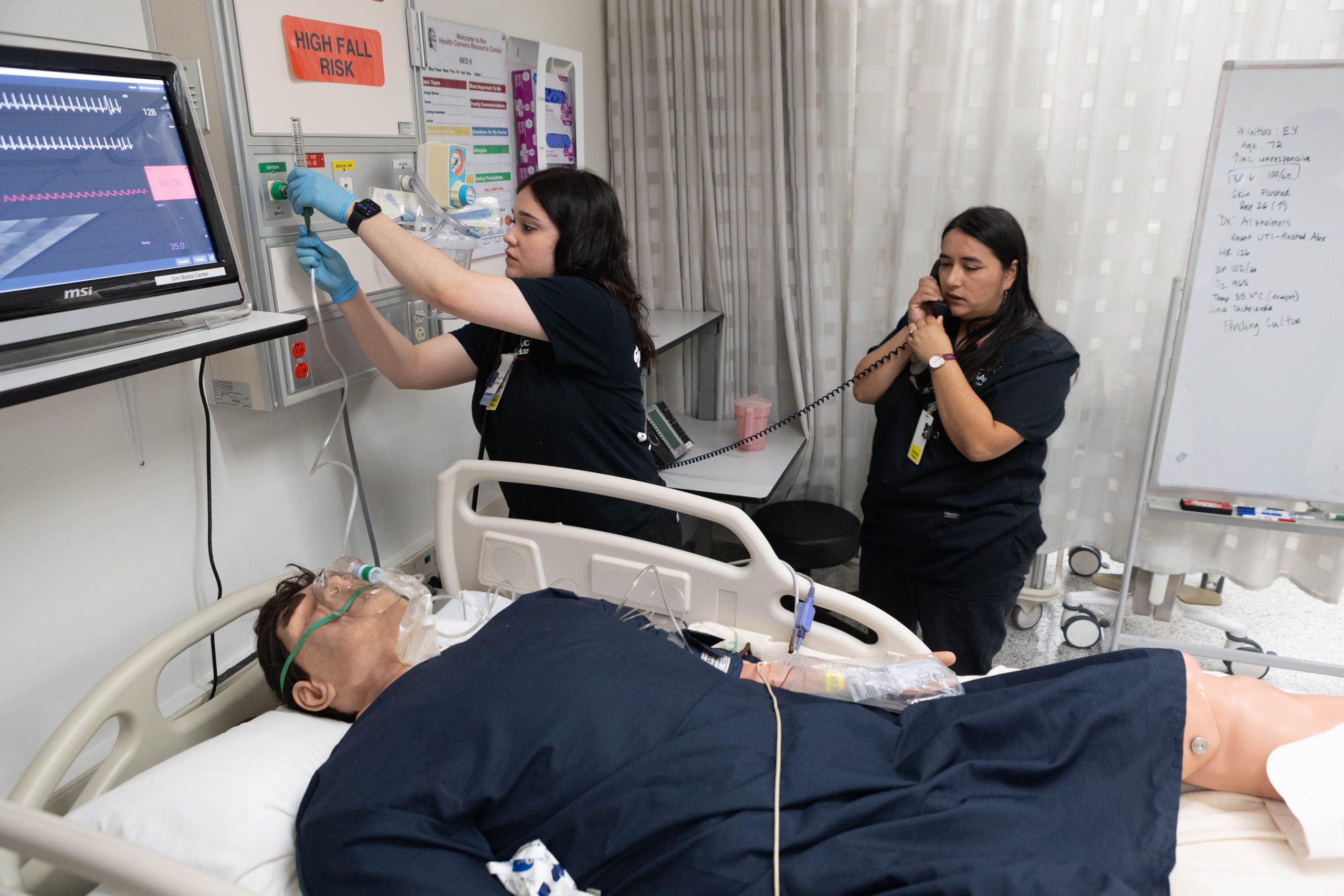
Potential solutions include offering financial incentives for hospitals to volunteer clinical placements as well as increasing the integration of technology in nursing education. For example, Mt. SAC employs high-tech mannequins and virtual reality simulations to provide controlled training environments for students.
Nonetheless, some educators advocate for a balanced approach that integrates both simulation and hands-on experiences to meet the state-required 500-hour mandate. Enhancements in working conditions for current nurses could also play a strategic role in revitalizing the workforce and redressing the current shortages in nursing education.