

Iran War Pushes Gas to $4.55 — and Your Grocery Bill Is Next

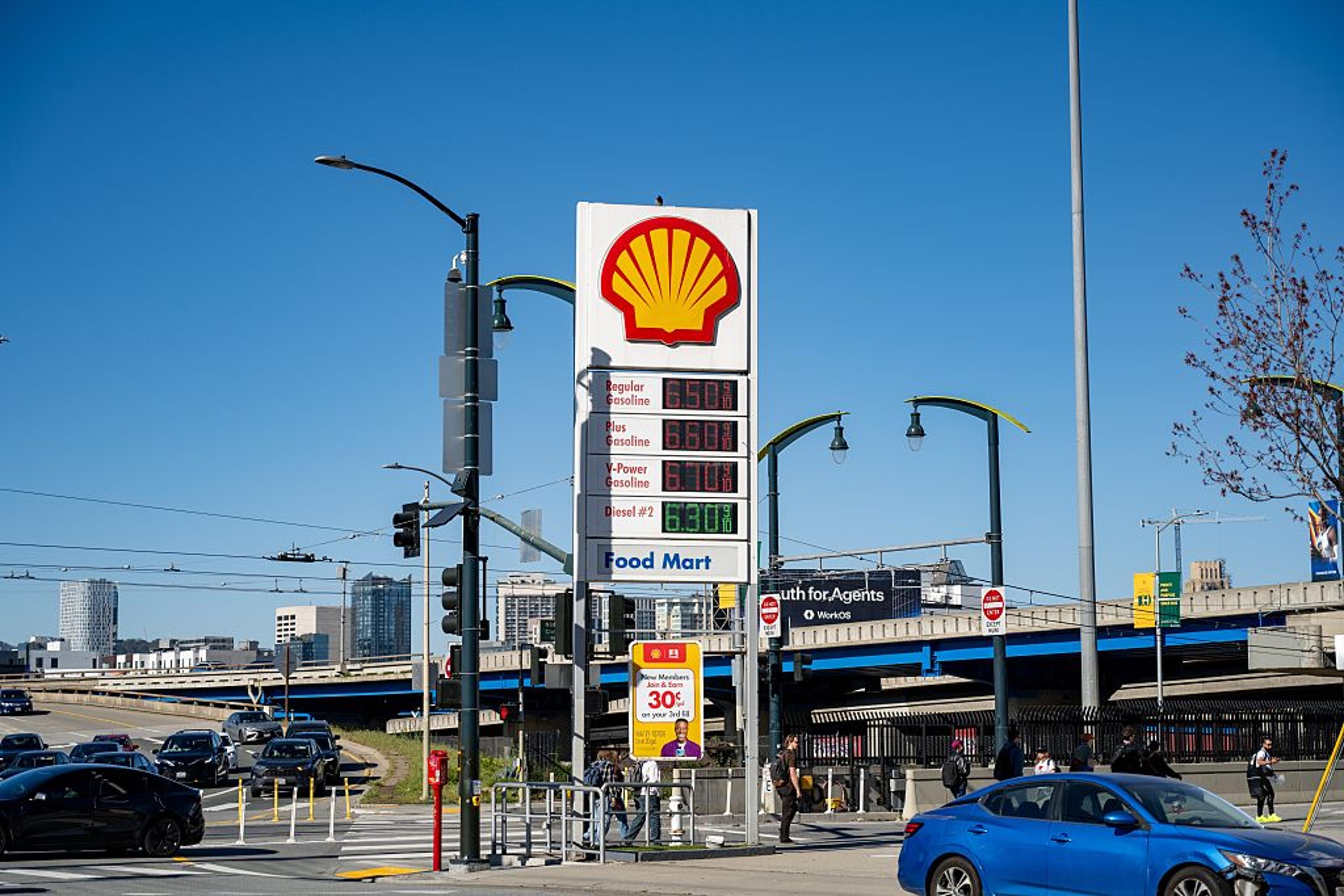
At gas stations across the country, the price of a gallon of regular climbed to a national average of $4.55 on May 8, up 25 cents in a single week and $1.40 higher than a year ago. The pump is the most visible cost of the war with Iran, but economists warn the deeper sting is just beginning to show up in another place Americans visit far more often: the grocery store.
The energy shock traces back to February 28, when U.S. and Israeli forces launched coordinated airstrikes on Iran in what was named Operation Epic Fury. Within a week, Iran declared the Strait of Hormuz closed, choking off a chokepoint through which roughly 20 percent of the world's seaborne oil normally flows. Brent crude surged past $100 a barrel for the first time in four years and peaked near $126. A fragile ceasefire has held since April 7, but fresh fire exchanges in Hormuz this month have kept oil markets on edge.
Diesel — the fuel that moves nearly every truck, tractor, and refrigerated trailer in the American food supply — has climbed even faster than gasoline. The national diesel average hit roughly $5.62 a gallon in late April, a 49 percent jump since the war began. Shipping companies have followed: UPS has raised domestic ground fuel surcharges by more than 6 percent, and the U.S. Postal Service began applying an 8 percent fuel surcharge on packages on April 26. According to the Center for American Progress, American families are paying about 80 cents more per gallon than before the conflict — roughly $300 million in additional fuel costs every day.
Those costs are starting to land at the checkout. The USDA's latest Food Price Outlook now projects all-food prices to rise 3.6 percent in 2026, up from a 3.1 percent forecast in February, with beef and veal expected to climb 6.3 percent. Fresh tomatoes have already hit eight-year highs, and a half-gallon of store-brand skim milk is up 34 cents from a year ago. The March consumer price index — capturing only the first month of the war — showed gasoline up 21.2 percent in a single month and the overall energy index up 10.9 percent, accounting for nearly three-quarters of the all-items rise.
Economists describe a two-stage hit on grocery shelves: first as higher diesel costs raise the price of moving produce, meat, and dairy from farm to store, then again months later as a fertilizer price shock works its way through next season's planting. Mark Zandi, chief economist at Moody's Analytics, told CBS News, "I think the damage has already been done, in part because there's no going back on oil prices."
The war is not the only force pushing grocery prices upward. As of spring 2026, about 61 percent of the continental United States is under moderate-to-exceptional drought, and Trump administration tariffs have raised input costs for farmers and importers of dairy, coffee, and produce. Joseph Glauber, a former USDA chief economist now at the International Food Policy Research Institute, told the Christian Science Monitor it "wouldn't surprise me to see some further rise" in food prices this year.
Whether prices ease soon depends largely on the Strait of Hormuz. Pakistan-mediated talks between Washington and Tehran have produced an outline for a peace memorandum, and oil briefly fell roughly 7 percent on news of progress. Each new flare-up in the Gulf has reversed the move. Forecasters expect gasoline to remain above pre-war levels through the rest of 2026, meaning the link between the conflict and the cost of an American family's weekly groceries is unlikely to break anytime soon.