

From AI Jesus to Iran: Trump Faces Backlash From Allies and Critics Alike
- Better American Media

- 4 hours ago
- 4 min read
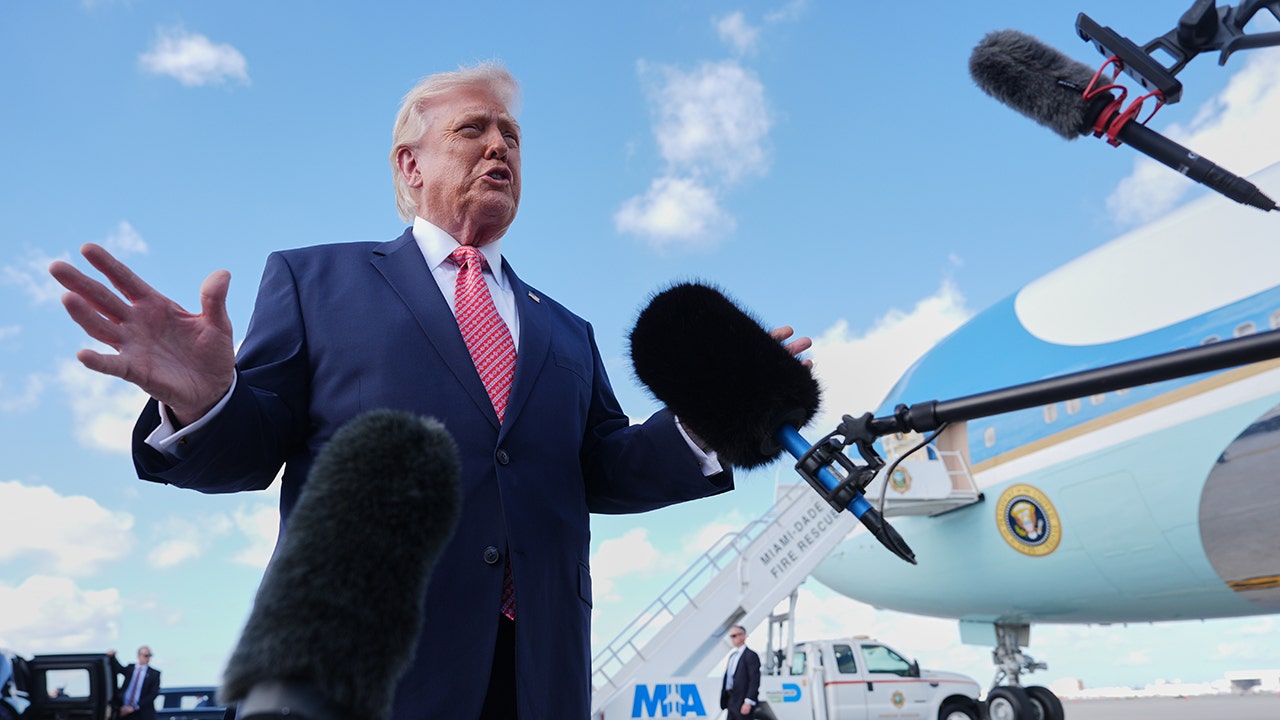
A wave of criticism has washed over the White House in recent weeks, coming not just from the political opposition but from some of President Trump's most steadfast supporters — evangelical and Catholic conservatives among them. The flashpoints: a controversial AI-generated image depicting Trump as Jesus Christ, escalating rhetoric over Iran, and a public spat with Pope Leo XIV that has reignited a long-running debate about the president's stability.
The controversy began when Trump posted — then deleted — an AI-generated image showing him in Christ-like red and white robes, glowing hands, healing a patient, with a demonic figure lurking in the background. The post stayed up for roughly 12 hours before being removed, a rare reversal for a president known for leaving even the most incendiary content online. Trump initially blamed "fake news" for the backlash, but the loudest critics were not from the left — they were conservative Catholics, Protestant writers, and pro-Trump podcasters.
Isabel Brown, a Catholic podcaster with the Daily Wire and a Trump supporter, called the post "frankly, disgusting and unacceptable, but also a profound misreading of the American people experiencing a true and beautiful revival of faith in Christ in the midst of our broken culture."
Riley Gaines, a conservative podcaster who has spoken at Trump rallies, wrote that she could not understand why he would post it, adding: "Two things are true" — that "a little humility would serve him well" and that "God shall not be mocked."
Conservative Protestant writer Megan Basham was equally direct: "He needs to take this down immediately and ask for forgiveness from the American people and then from God."
Rev. James Martin, editor-at-large of the Catholic magazine America, offered a more wry take, telling CNN: "I don't know too many doctors that have glowing hands. That's the most Jesus-looking picture I think I could imagine."
Trump offered a different explanation for the image, saying: "I thought it was me as a doctor, and had to do with Red Cross, as a Red Cross worker, which we support. It's supposed to be me as a doctor, making people better. And I do make people better. I make people a lot better."
Vice President JD Vance defended the president in an interview with Fox's Bret Baier: "I think the president was posting a joke. And, of course, he took it down because he recognized that a lot of people weren't understanding his humor in that case."
Dispute With Pope Leo
The image controversy followed closely on the heels of a public exchange between Trump and Pope Leo XIV, the first American-born pontiff. Trump had called the pope "weak on crime" and "terrible on foreign policy." The pope responded with notable composure: "I have no fear of the Trump administration."
It was not the first time Trump has stirred controversy involving religious imagery. Nearly a year before the AI Jesus post, he had drawn criticism for sharing an image of himself dressed as the Pope. And in February, Trump was widely condemned for an image at the end of a video that depicted Barack and Michelle Obama as apes — the president claimed he had not seen that portion and did not apologize.
Iran Rhetoric Draws Scrutiny
Amid the religious imagery furor, Trump also came under fire for remarks tied to the Iran conflict. Speaking about a deadline he had set for military action against Iranian energy infrastructure, Trump warned: "A whole civilization will die tonight, never to be brought back again." He subsequently granted a two-week extension — not the first delay in the standoff.
The administration announced that U.S. forces would fire on any vessel attempting to challenge a blockade of the Strait of Hormuz, a waterway through which roughly one-fifth of the world's oil supply flows. Critics argue the conflict, which some believe was launched under pressure from Israel, lacks a clear exit strategy. Trump has maintained that America has already won and can withdraw at any time, though that position falls short of his original objective of halting Iran's uranium enrichment program.
Liz Peek, a Hill columnist and Fox News contributor, offered a defense of the president's approach: "Trump knows exactly what he is doing," she wrote, adding that "Trump will continue to use maximalist (and sometimes outrageous) military and diplomatic pressure in his campaign to rid the Middle East of Iran's near 50-year campaign of terror."
Questions About Stability
The cluster of controversies has intensified a broader, if largely symbolic, debate about the president's mental fitness. Fifty House Democrats introduced legislation calling for a commission to evaluate Trump's mental health — a move Republicans swiftly dismissed. Any invocation of the 25th Amendment to remove a sitting president would require a Cabinet majority and a two-thirds vote in both chambers of Congress, making removal through that mechanism extraordinarily unlikely.
Still, the conversation has spread well beyond Democratic circles. A New York Times analysis described "President Trump's erratic behavior and extreme comments in recent days and weeks" as having "turbocharged the crazy-like-a-fox-or-just-plain-crazy debate that has followed him on the national political stage for a decade." The White House pushed back, saying Trump "is sharp and keeping his opponents on edge."
Former White House lawyer Ty Cobb, who served during Trump's first term, described him as "clearly insane." Retired generals and former diplomats have also raised concerns. A Reuters/Ipsos poll conducted in February found that 61 percent of respondents believe Trump has grown more erratic with age, while 45 percent said they believe he remains "mentally sharp and able to deal with challenges."
