

DOJ Sues Arizona Secretary of State Over Voter Data Privacy Dispute

Legal Conflict Over Arizona's Voter Data Emerges
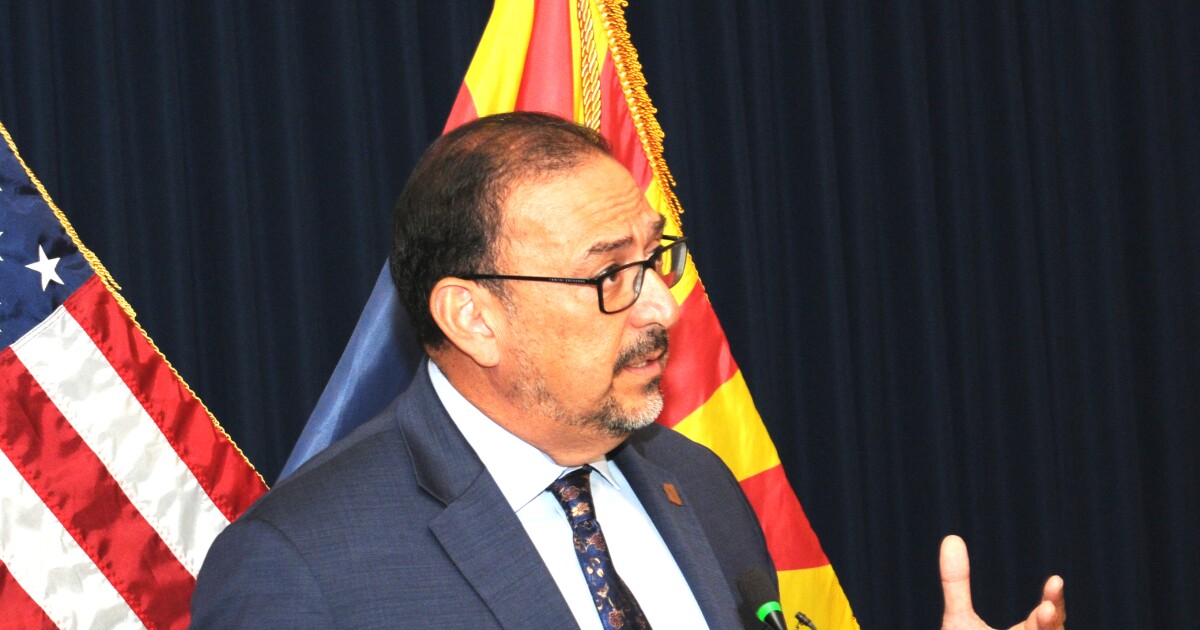
The Trump administration has taken legal action against Arizona Secretary of State Adrian Fontes regarding his refusal to provide certain voter registration and election data. This legal dispute highlights the ongoing friction between federal and state authorities concerning voter data management and transparency.
Initiated in federal court, the lawsuit posits that the U.S. Attorney General’s office, led by Pam Bondi, has the authority to compel adherence to federal election laws, particularly concerning the accuracy of voter registration lists. According to Harmeet Dhillon, Bondi’s assistant attorney general focused on civil rights, a formal request was made for Fontes to supply various records to the Department of Justice using encrypted channels.
The records sought by the Justice Department include comprehensive voter registration details such as names, dates of birth, addresses, and identification numbers. Fontes has cited both state and federal privacy statutes in his refusal, asserting that disclosure of this information is prohibited under these laws.
In response, Dhillon has approached U.S. District Court Judge Susan Bolton, requesting a ruling that Fontes's refusal to comply amounts to a violation of the Civil Rights Act—a demand for the requested records to be submitted within five days of any ruling is also part of this request.
Pam Bondi remarked, “The Department of Justice has now sued 23 states for failing to provide voter data roll data and will continue filing lawsuits to protect American elections.” She pointed to the necessity of maintaining accurate voter rolls as fundamental to the integrity of elections and has cautioned states about potential legal repercussions for non-compliance.
Fontes has expressed his readiness to confront significant consequences, stating, “I don’t necessarily want to go to jail, but I’m willing to go to jail,” and added in reference to a senior DOJ official, “He can pound sand.”
This lawsuit unfolds against the backdrop of federal mandates like the National Voter Registration Act and the Help America Vote Act, which encourage states to uphold effective voter registration practices. Furthermore, the Civil Rights Act of 1960 requires the retention of voter registration records for at least 22 months following elections.
Fontes maintains that releasing the requested data, classified as sensitive personal information, could place individuals at risk of identity theft and fraud under protections provided by the federal Privacy Act of 1974 along with state privacy regulations.
Questions surrounding the Trump administration’s intentions have been raised, particularly concerning shifting explanations for the data request. The administration’s dedication to investigating claims of election fraud and the possibility of data sharing with the Department of Homeland Security have further fueled these concerns.
Additionally, the lawsuit coincides with a federal judicial decision permitting a private foundation to pursue similar voter data records from Fontes. U.S. District Court Judge Michael Liburdi acknowledged that the foundation has the right to evaluate Arizona's adherence to regulations governing voter registration maintenance.
Arizona's involvement in the Electronic Registration Information Center (ERIC), a system aimed at ensuring accurate voter rolls, is also under review. The private foundation seeks access to reports detailing inaccuracies in listings of deceased voters, which Fontes has opted to withhold.
Judge Liburdi underscored the foundation’s claims as critical for electoral integrity and transparency, arguing that access to these records is vital for assessing compliance and increasing public understanding regarding the accuracy of voter rolls.