

UAW's Political Challenges: Divisions and Trust Issues in Michigan

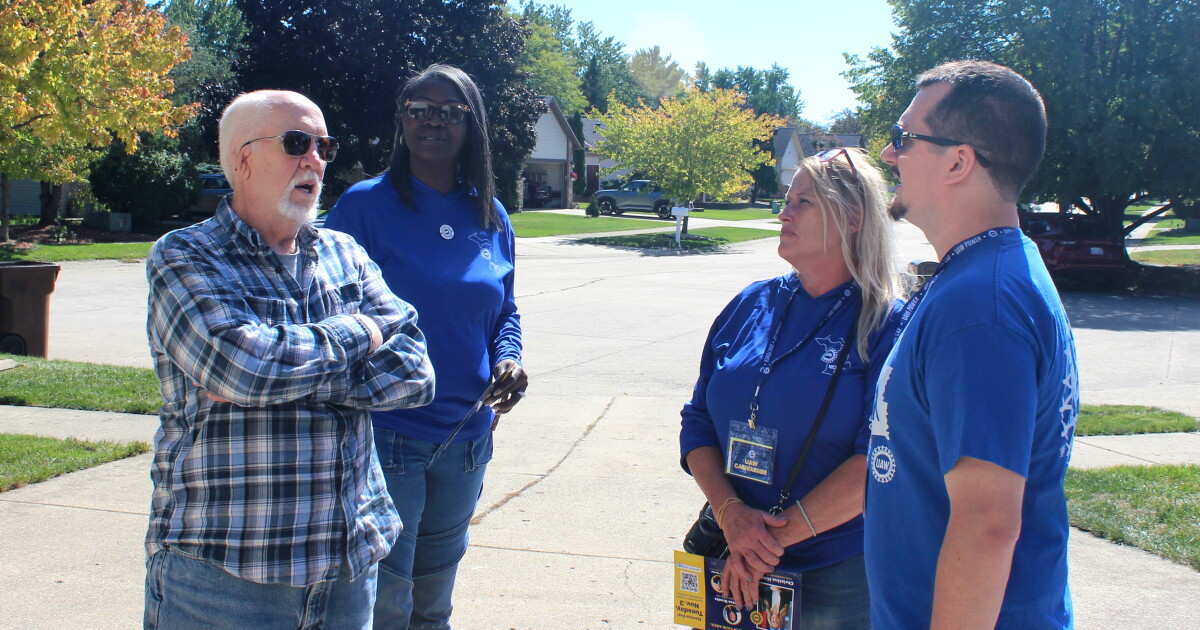
As the UAW attempts to strengthen its political presence in Michigan, the organization faces significant challenges from within and outside its ranks. In a region previously dominated by union support for the Democratic Party, members are exploring their political affiliations, especially in light of the upcoming midterm elections. Walter Usakowski, a retired auto worker with a long history at Ford, voiced his backing for Democratic candidates but expressed concern about the political leanings of his colleagues.
Political Fragmentation Within the UAW
The UAW is currently navigating a complex landscape marked by internal divisions regarding political endorsements. Historically aligned with the Democratic Party, the union's membership has exhibited a growing divergence, with some members now favoring Republican candidates, including those linked to former President Donald Trump. This shift poses a challenge to the union's cohesion and its future influence in political affairs.
This internal struggle was evident during a canvassing event in Macomb County, a region that significantly supported Trump in the 2024 elections. Many UAW members, primarily retirees, shared mixed perspectives on whether the Democratic Party or the Republican Party would be more effective in addressing issues such as the rising cost of living. JJ Jewell from the UAW's Community Action Program highlighted the ongoing efforts stating, “Even if this election goes fantastically, that’s not mission accomplished. That means we’re 1% of the way done.”
Betty Anderson, another union member, articulated her disappointment with some of her peers who continue to support Trump, feeling that they are abandoning the fundamental values of the working class. This rift reflects broader national trends, as union voters increasingly find themselves split between supporting Trump and Democratic nominees such as Kamala Harris.
Initiatives for Trust Restoration
Rebuilding trust is a significant aim for the UAW, especially in light of recent corruption scandals involving union leaders. Under the leadership of President Shawn Fain, elected in 2023, the UAW has prioritized transparency and has made advances in labor disputes, which has helped to restore some faith among its members. Usakowski noted a positive shift, stating, “I think the UAW members now are starting to fall a little more in line.”
The union's political endorsements have reflected a sometimes unpredictable approach, including the endorsement of progressive candidate Abdul El-Sayed, who champions universal healthcare and critiques corporate influence. His stance has resonated with the leadership amidst the traditional alignments.
Conversely, Republican Mike Rogers is emphasizing his stance against federal regulations that promote electric vehicle production, an issue that resonates with certain autoworkers concerned about the future of the industry.
Mobilization Efforts to Secure Political Relevance
To maintain its influence, the UAW is prioritizing voter mobilization as essential to its strategy. Robert Bruno from the University of Illinois Urbana-Champaign stated, “You don’t win campaigns off of your endorsements. You win campaigns at the door, or at the bar, or at the union hall.”
While the UAW's membership has declined from over 600,000 in the 1980s to approximately 350,000 today, it remains a significant union in Michigan. The group is actively encouraging voter participation, particularly during early voting in primary elections. Fain has emphasized the importance of focusing on member-driven initiatives, particularly on matters such as affordability, reinforcing the union's commitment to its members.
“We are as active as we can be right now,” Fain remarked, reflecting the UAW's determination to restore its political clout in Michigan.