

Trump's Tariff Deadline Sparks Urgent Trade Negotiations with Allies

Impending Tariff Deadline Drives U.S. Trade Negotiations
As the deadline for trade agreements approaches on Wednesday, the U.S. administration is ramping up its attempts to secure deals with international trading partners. With the possibility of tariff increases looming as of August 1, the U.S. plans to send warning letters to various nations that have yet to finalize agreements.
This escalation adds another layer of uncertainty to international trade relations, affecting both businesses and consumers alike. Speculation is rife over which countries will be targeted and whether President Donald Trump may choose to postpone these tariff increases yet again.
Kevin Hassett, director of the White House National Economic Council, stated on CBS' "Face the Nation" that the future of negotiations ultimately lies in the President's hands. “The United States is always willing to talk to everybody about everything,” Hassett noted, adding, “There are deadlines, and there are things that are close, so maybe things will push back past the deadline or maybe they won’t. In the end the president is going to make that judgment.”
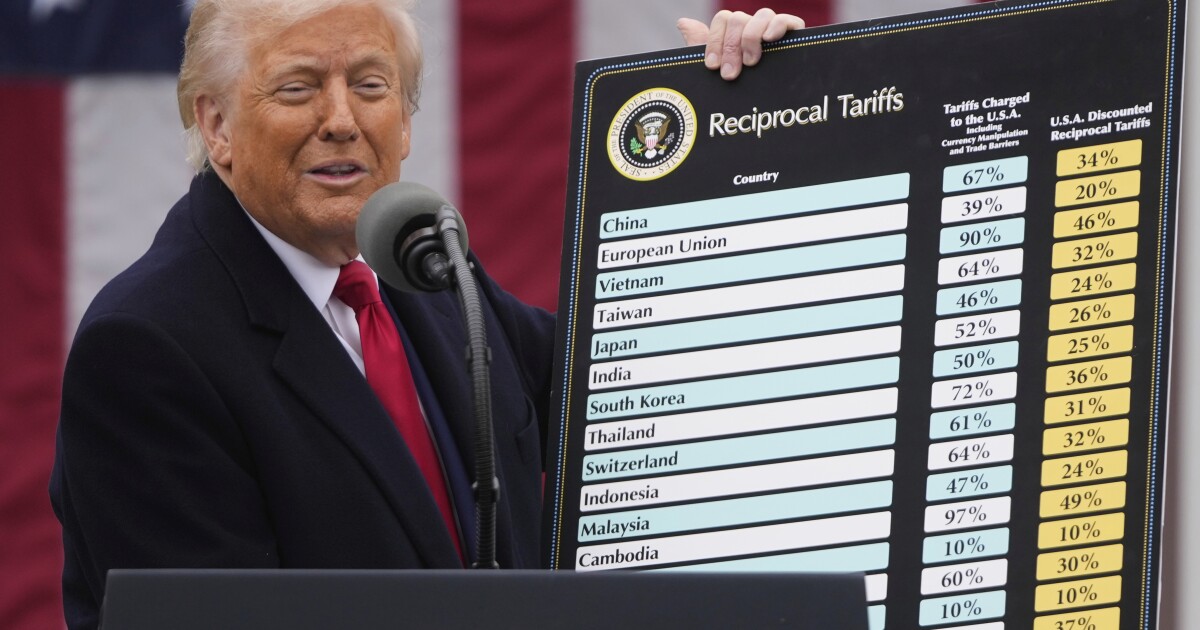
Stephen Miran, chair of the White House Council of Economic Advisers, remarked that countries that are actively negotiating could see deadline extensions. Previous tariff increases announced earlier have been temporarily suspended for 90 days due to market turbulence, although only the United Kingdom and Vietnam have managed to reach agreements thus far.
The U.S. has already implemented higher tariffs on nations that hold large trade surpluses with America and has set a baseline tax of 10% on imports, in addition to separate tariffs of 50% on steel and aluminum and 25% on automotive products.
President Trump indicated that the letters to countries without agreements would specify the applicable tariff rates, while confirming that enforcement would begin on August 1. He stated the number of nations affected could range from “12 to 15.”
Treasury Secretary Scott Bessent downplayed the notion of a new deadline as August 1 approaches, indicating that details of the administration's strategy remain unclear. "We’ll see," Bessent said during a segment on CNN's State of the Union, projecting that developments in trade discussions will occur rapidly.
With rising tensions involving the BRICS countries, President Trump is planning an additional 10% tariff on nations that align with BRICS’ policies, which have been critical of U.S. tariff actions. Interestingly, Trump disclosed a deal with Vietnam that facilitates duty-free entry of U.S. products, while Vietnamese exports to the U.S. will face a reduced tax of 20%, a significant decrease from the initially proposed 46%.
When addressing potential negotiations with the European Union or India, Trump indicated that sending letters might prove to be a more efficient approach than comprehensive agreements. "We have India coming up and with Vietnam, we did it, but much easier to send a letter," he commented.
In a noteworthy clarification, Canada's Ambassador Pete Hoekstra confirmed that Canada will not receive any warning letters. Ongoing discussions between the U.S. and Canada are aimed at establishing a new trade framework, but Hoekstra provided no specific timeline for completion.
Canadian Prime Minister Mark Carney is aiming for a new agreement by July 21 and has warned of potential trade countermeasures if no arrangement is reached. Hoekstra mentioned that some tariffs may still apply, signaling that the U.S. intends to engage with Canada more substantially than just sending a letter.