

Trump's Immigration Policy Ignites Concerns Over Racial Profiling

Concerns are mounting within immigrant communities as the enforcement of a law mandating undocumented individuals in the United States to register and carry identification has taken effect. Advocates are warning that this measure could lead to increased racial profiling and create confusion about its implications for public safety.
Jose Patiño, the vice president of Aliento, a statewide advocacy organization in Arizona, expressed worries about the implications of the identification requirement for undocumented individuals. He stated, “It happens already to an extent. … I think this would make it even worse because how would you know somebody is undocumented?” This sentiment underscores the apprehension surrounding the details of how the new policy will be implemented.
In a recent ruling, a federal judge affirmed the legal foundation of the Trump administration's directive, emphasizing that the registration requirement is a long-standing component of U.S. law. Kristi Noem, the Homeland Secretary, reinforced this stance by stating, “The Trump administration will enforce all our immigration laws — we will not pick and choose which laws we will enforce. We must know who is in our country for the safety and security of our homeland and all Americans.”
Enforcement Challenges
This law, which has seen little enforcement in recent years, mandates that persons over 14 who lack legal immigration status must register, provide fingerprints, and disclose their address. Non-compliance can lead to criminal charges, fines, and imprisonment. However, the ambiguity of the policy has been highlighted by instances involving U.S. citizens mistakenly being detained, and a problematic online appointment application that has inadvertently affected work permits, including those of U.S. citizens.
Addressing these issues, Guerline Jozef from the Haitian Bridge Alliance has noted a troubling rise in racial profiling, particularly against Black migrants. “It is very hard to even communicate with the community members on what to do, telling them they need to know their rights, but they trample on their rights anyway,” she remarked, drawing parallels to historical instances where targeted documentation was mandated for specific demographic groups.
Historical Perspective and Current Effects
Lynn Marcus, a professor at the University of Arizona, remarked that such stringent identification requirements have been inactive for many years. The current stringent enforcement may compel U.S. citizens themselves to carry proof of citizenship, raising concerns about discrimination rooted in appearance or language.
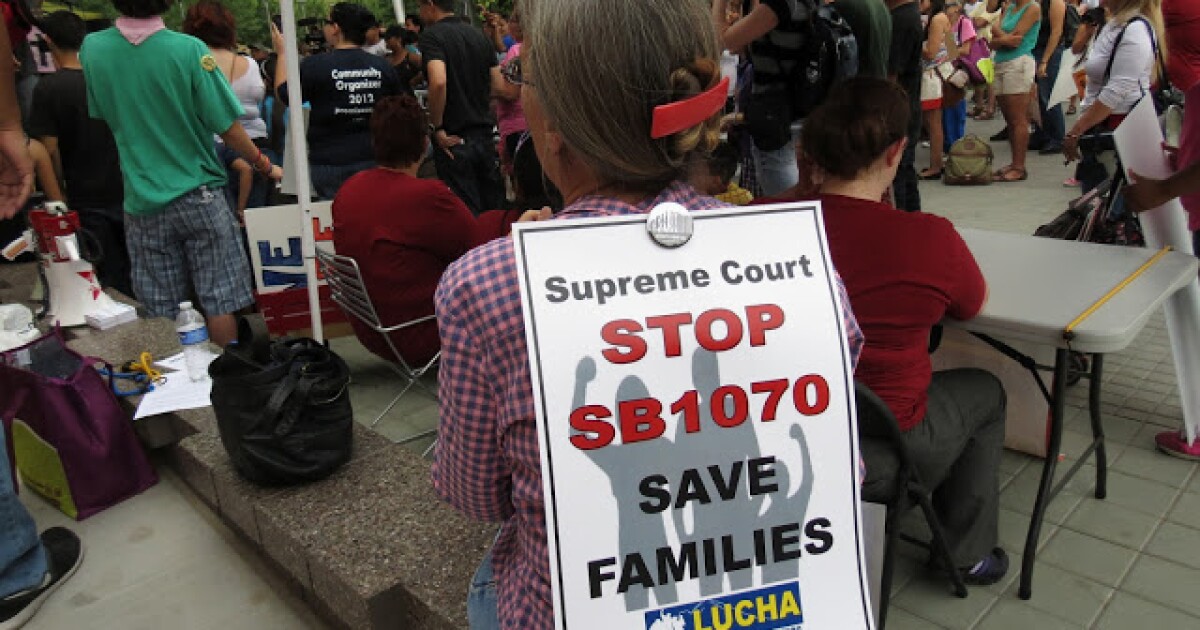
The impact on the mental well-being of immigrant communities is profound. Eileen Diaz McConnell from Arizona State University has compared the climate created by this mandate to the fear caused by Arizona’s SB 1070 law, which instilled significant anxiety in Latino families. “Parents wouldn’t ride together in a car. They were always separated because they were worried they would be stopped,” she noted.
Patiño, a recipient of Deferred Action for Childhood Arrivals, highlighted growing fears among those who do not possess special immigration status. He recounted a story of a former intern’s mother who now refrains from visiting public spaces due to the fear of potential detention. “It’s like she’s afraid of her shadow or, like, even to go out and throw out the trash,” he expressed.