

Trump Publicly Attacks Pope Leo Over Iran War Disagreement
- Better American Media

- 8 hours ago
- 3 min read
When a sitting U.S. president and the leader of the world's 1.4 billion Catholics publicly clash over war, religion, and political loyalty, it matters far beyond Washington or Rome. The dispute now unfolding between Donald Trump and Pope Leo XIV touches on some of the most fundamental questions in American public life — the limits of presidential authority, the role of faith in politics, and what it means to speak for a nation versus speaking for the world.
Trump has been publicly attacking the Pope after he called Trump's threats to bomb Iran "truly unacceptable". Trump responded on social media, calling Leo "Weak" and a captive of the "Radical Left." For American voters who follow either figure — or both — understanding how this feud developed helps clarify what each man actually stands for.
The Pope's Vision Looks Very Different From Trump's
From his very first appearance on the balcony of St. Peter's Basilica, Leo XIV set a clear tone. His opening words were: "Peace with you all … the first greeting of the risen Christ, the Good Shepherd who gave his life for the flock of God." In his first Sunday blessing, he pointed to the Russian war in Ukraine and the violence in Gaza as evidence of what he called a "third world war in pieces." The following Monday, speaking to journalists, he quoted the Sermon on the Mount directly: "Blessed are the peacemakers."
Notably, Leo did not address the world in English despite being American-born. He opened his first papal announcement in Italian, then switched to Spanish to greet the people of Peru, where he had served as a bishop. His subsequent appearances continued in Italian and Spanish. That choice sent a clear signal — he sees himself as a global religious leader, not a representative of American interests or identity.
Before Becoming Pope, Leo Was Already Speaking Out
Leo XIV's willingness to address political and global affairs is not new. While serving as a bishop in Peru in 2022, Prevost publicly described Russia's invasion of Ukraine as an "imperialist invasion in which Russia wants to conquer territory for reasons of power given Ukraine's strategic location," during an appearance on the television program "Weekly Expression." That footage resurfaced in Italian media after his election as pope.
Earlier in 2025, then-Cardinal Prevost also used social media to share a news analysis that criticized Vice President JD Vance's position on immigration. The headline he shared read: "JD Vance is wrong: Jesus doesn't ask us to rank our love for others." These actions showed a church leader who was actively engaged with policy debates well before stepping into the papacy.
Easter Weekend Brought Things to a Head
The tension between the two figures became impossible to ignore during Holy Week. On Palm Sunday, Leo XIV spoke about Jesus as the "King of Peace" and warned that God "does not listen to the prayers of those who wage war, but rejects them, saying: 'Even though you make many prayers, I will not listen: your hands are full of blood.'"
That same weekend, Trump hosted conservative religious leaders at the White House, where adviser Paula White drew a comparison between Trump and a persecuted savior. Then, on Easter Sunday, Trump threatened to bomb Iran's infrastructure and spoke of the "eradication" of "a whole civilization." The pope's response was direct — he called that kind of language "truly unacceptable."
The Back-and-Forth Continues
Trump responded to the pope's criticism with a social media post calling Leo "weak" and aligned with the "Radical Left." He wrote, "I don't want a Pope who criticizes the President of the United States because I'm doing exactly what I was elected, IN A LANDSLIDE, to do." It is worth noting that Trump's 2024 election victory was not a landslide by historical standards. He also told the pope to "focus on being a Great Pope, not a Politician."
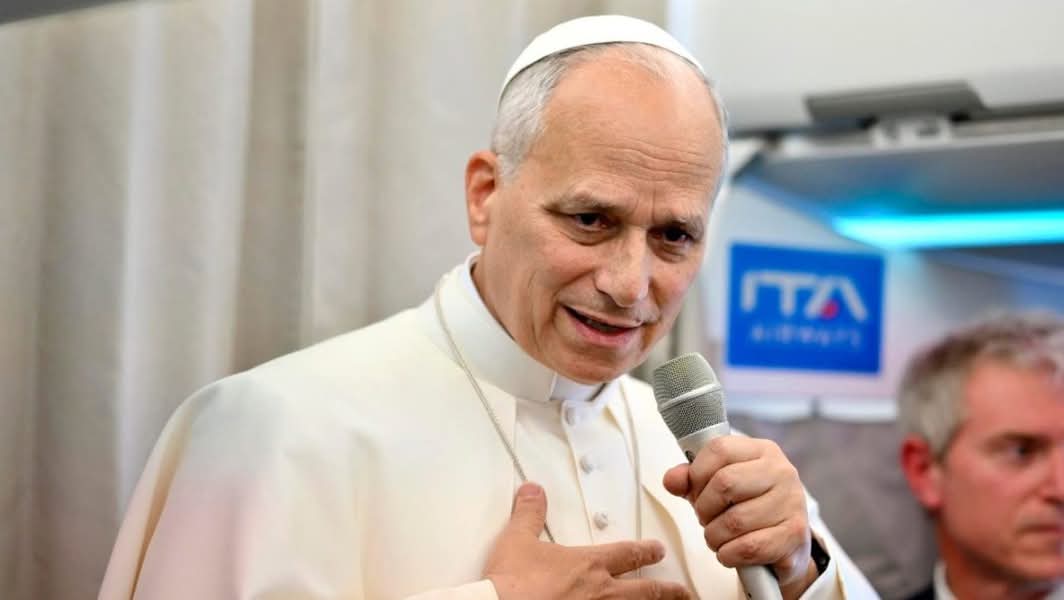
Leo XIV responded while traveling by plane to Algeria, speaking with The Associated Press. "To put my message on the same plane as what the president has attempted to do here, I think is not understanding what the message of the Gospel is," he said. "And I'm sorry to hear that but I will continue on what I believe is the mission of the church in the world today."
He also addressed the broader confrontation directly: "I'm not afraid of the Trump administration, or of speaking out loudly about the message of the Gospel, which is what the Church works for."
This kind of open, ongoing dispute between an American president and a sitting pope is essentially without modern precedent — and the fact that both men are American makes it even more unusual. What it ultimately reflects is a genuine disagreement about what leadership looks like, what faith demands, and whether religious institutions should stay quiet when political figures make decisions that affect millions of lives.
