

Trump Administration's Budget Cuts Threaten Native American Arts College

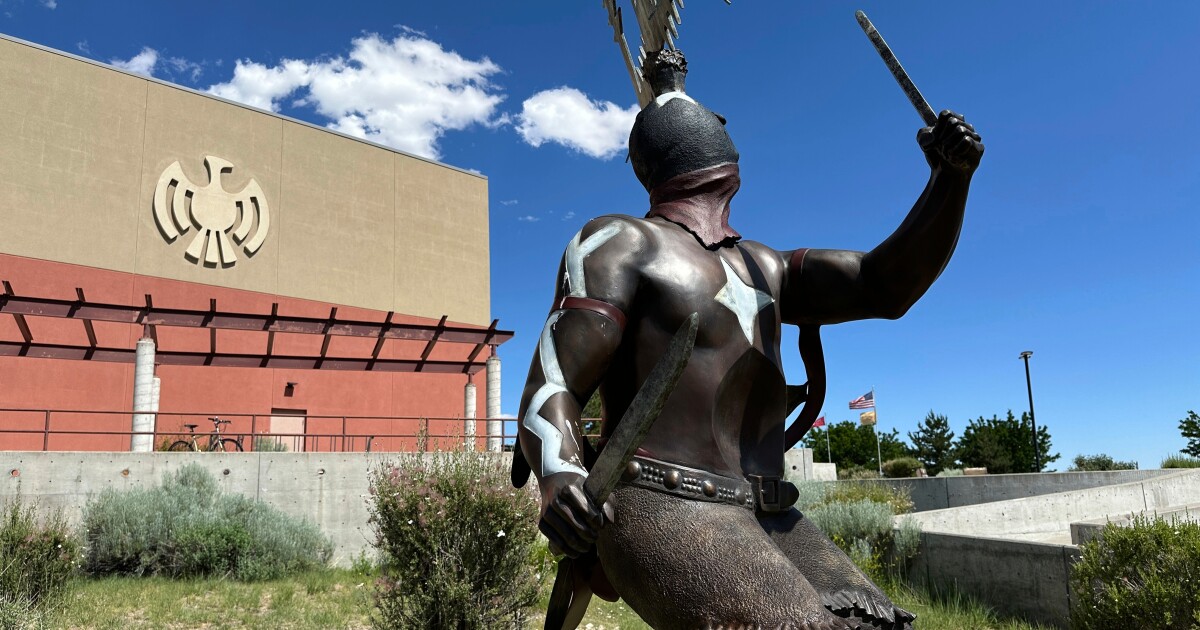
Potential Budget Cuts Challenge Native American Arts Education
Recent proposals from the Trump administration threaten to significantly diminish federal financial support for tribal colleges and universities, particularly targeting the Institute for American Indian Arts (IAIA) located in Santa Fe, New Mexico. If Congress approves this budget, IAIA could face an unsettling loss of over $13 million in federal appropriations starting this October, representing a critical disruption in funding for the institution, which has operated for nearly four decades.
Robert Martin, president of IAIA, emphasized the significance of the potential cuts, stating, “You can’t wipe out 63 years of our history and what we’ve accomplished with one budget.” Founded in 1962, IAIA provides essential educational pathways for Native artists, with notable alumni such as U.S. poet laureate Joy Harjo and bestselling author Tommy Orange. It holds the distinction of being the only four-year fine arts institution in the world dedicated to the contemporary arts of Native American and Alaskan Native communities.
In response to the proposed cuts, President Martin has engaged in discussions with members of Congress across party lines, who have expressed support for maintaining funding for IAIA. Nevertheless, he is wary of the impact this uncertainty may have on student and staff morale. Martin has also met with the office of U.S. Rep. Tom Cole, a Chickasaw Nation member and the chairman of the House Appropriations Committee, who champions tribal funding but was unavailable for comment during these discussions.
Breana Brave Heart, a junior at IAIA, voiced her anxiety about the implications of the budget cut proposal on her education. “IAIA is under attack,” she said, calling on fellow students to contact their congressional representatives to advocate for the institute's funding.
Martin noted that the Trump administration's broader efforts to redefine federal policies surrounding diversity, equity, and inclusion present additional challenges for tribal colleges. He explained that the DEI initiatives often overlook the unique status of tribal nations, stating, “It’s a problem for us and many other organizations when you’ve got that DEI initiative which really is not applicable to us, because we’re not a racial category, we’re a political status as a result of the treaties.”
The budget proposal has faced criticism from Democratic Sen. Ben Ray Luján of New Mexico, who characterized the cuts as part of a larger pattern of the administration “turning its back on Native communities and breaking our trust responsibilities.” Luján reiterated his commitment to ensuring continued funding for IAIA in collaboration with congressional appropriators and the New Mexico delegation.
This fiscal proposal champions $3.75 trillion in tax cuts, which include both extensions of previous individual income tax reductions and the introduction of new temporary measures. However, these reductions are counterbalanced by $1.3 trillion in spending cuts affecting crucial services such as Medicaid and food assistance.
Although the U.S. Department of the Interior initiated measures to protect tribal nations’ trust obligations from DEI-related budget cuts in January, skepticism persists. Staff reductions have already occurred at other congressional chartered institutions, including the Southwestern Indian Polytechnic Institute and Haskell Indian Nations University, under federal downsizing strategies implemented during the Trump administration. A lawsuit earlier this year underscored the precarious nature of these roles, with rehired staff potentially facing temporary positions rather than certainty in employment.
Ahniwake Rose, president of the American Indian Higher Education Consortium, conveyed the distress caused by the administration’s budgetary priorities. “That’s been hard for our staff, our students, our faculty to see that the priority of the administration through the Department of Interior might not be on tribal colleges,” Rose articulated. The budget proposed by the Interior Department suggests a dramatic cut of over 80% in funding for the Bureau of Indian Education’s post-secondary initiatives, potentially jeopardizing tuition-free educational opportunities for tribal citizens at Tribal Colleges and Universities (TCUs).
The Interior Department was not available for immediate commentary regarding these developments.