

Primary Elections Highlight Party Divisions and Trump's Enduring Impact
- Better American Media

- 2 days ago
- 3 min read
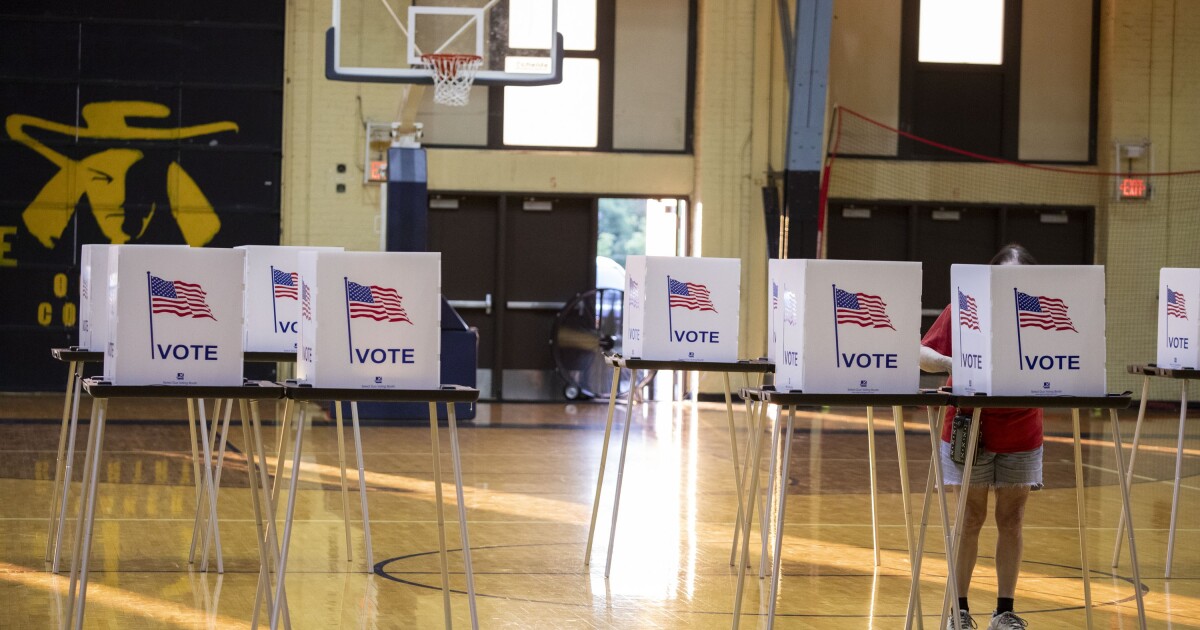
In a vivid display of the current political climate, recent primary elections across various states provided insights into the significant divisions within party lines. From notable endorsements shaping Republican outcomes to victories for both established and progressive Democrats, the elections reflect the ongoing influence of former President Trump and the shifting dynamics of the Democratic Party.
The key contests in states such as Kansas, Michigan, Missouri, Virginia, and Washington are instrumental in setting the stage for the upcoming congressional elections. Among these, the still-undecided Democratic Senate primary in Michigan emerges as a focal point, indicating the competitive landscape as swing voters begin to make their choices for the general election.
Democratic Party Dynamics
The outcomes of the primaries revealed a divide within the Democratic Party, with both the establishment and more progressive factions celebrating wins, although the establishment secured a greater number of victories. Particularly notable is the unresolved Senate race in Michigan, where former health director Abdul El-Sayed leads Rep. Haley Stevens. A win for El-Sayed could signal a stronger embrace of progressive policies like Medicare for All in a state known for its swing voter status, while Stevens represents a moderate establishment approach.
Regardless of who prevails, this race highlights a significant schism in Democratic primary voter preferences. The eventual nominee will head into the general election against Republican Mike Rogers, a former U.S. Representative.
Additionally, in a noteworthy victory, progressive William Lawrence won in a competitive district in Michigan, setting the stage for a challenge against incumbent Rep. Tom Barrett this November.
In Missouri and Virginia, establishment Democrats celebrated victories, with Rep. Wesley Bell defeating progressive challenger Cori Bush in Missouri’s 1st Congressional District. Bell's win sets him up against Republican Paul Berry in what is regarded as a solidly Democratic district. Meanwhile, Virginia Democrats nominated establishment candidates for two House seats, hoping to strengthen their influence in the upcoming elections.
Financial Influences in Campaigns
Financial dynamics played a critical role, particularly noticeable in Michigan's Senate primary. Abdul El-Sayed publicly criticized the pro-Israel PAC AIPAC for its substantial funding towards his opponent, Stevens. The significant investments in this race are underscored by data indicating that Michigan has seen $52 million in outside expenditures by mid-July, marking it as one of the costliest elections after Texas.
AIPAC’s backing of Bell in St. Louis is similarly indicative of this trend, as it aligns with his supportive stance on U.S. aid to Israel, aiming to block any candidate who might oppose such positions.
The Republican Landscape Under Trump
On the Republican side, candidates endorsed by Trump achieved success in primaries held in Washington, Kansas, and Michigan. Notably, Amanda McKinney won in Washington’s 4th district, a seat previously held by a Republican who voted for Trump's impeachment. McKinney will now face Democrat John Duresky in the forthcoming election.
Furthermore, Trump-backed candidates are also contesting gubernatorial nominations in both Michigan and Kansas. In Michigan, Rep. John James will take on Secretary of State Jocelyn Benson, while Ty Masterson is set to face Cindy Holscher in Kansas. These races highlight the nuanced political dynamics in these states, even as Trump remains a pivotal figure within the GOP.
Setbacks for Republican Measures
Republicans faced challenges with ballot measures in Missouri and Kansas, both of which were ultimately rejected by voters. In Kansas, a proposed change to how state supreme court justices are elected was denied, keeping the current appointment system intact—a system that has mostly seen justices appointed by Democratic governors who uphold abortion rights. Meanwhile, Missouri voters quelled efforts to complicate the amendment process, which would have introduced additional hurdles for future amendments.
These results indicate a growing resistance among voters to Republican-led initiatives, suggesting shifting currents in public opinion regarding key issues.