

Muslim Senate Nominee Abdul El-Sayed Battles Rising Islamophobia
- Better American Media

- 1 day ago
- 2 min read
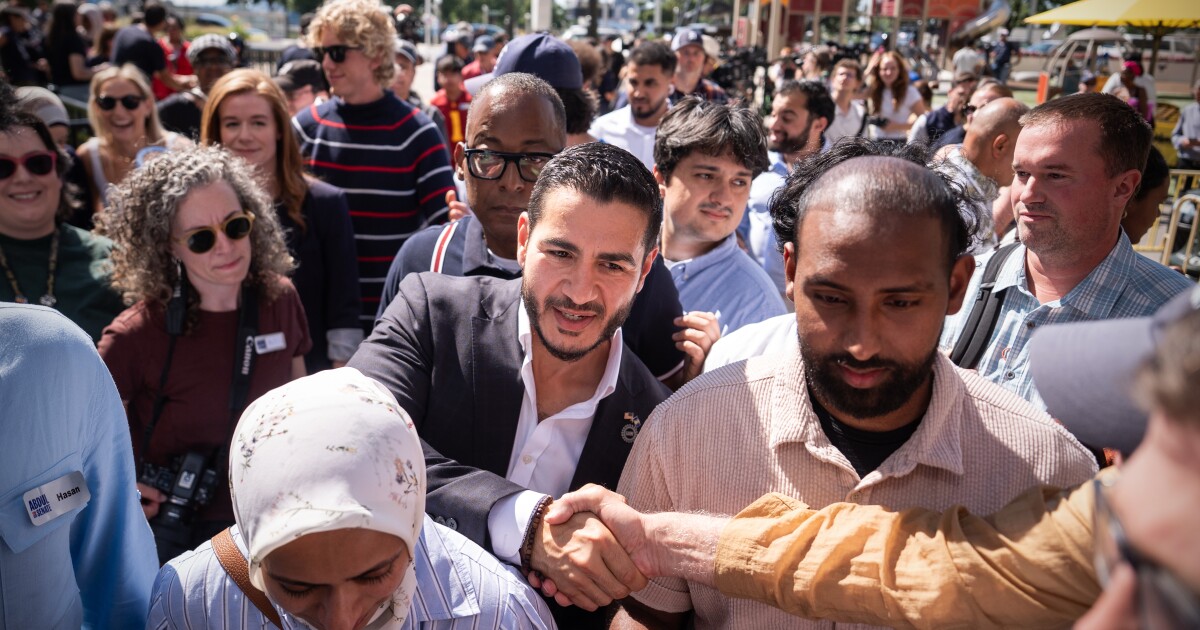
Historic Senate Nomination Emerges Amid Rising Anti-Muslim Sentiment
In a significant political development for the state of Michigan, Abdul El-Sayed has achieved a historic milestone by becoming the first Muslim to secure the Democratic nomination for the U.S. Senate. However, this achievement occurs against a backdrop of increasing anti-Muslim sentiment in America, highlighting the ongoing obstacles faced by the Muslim community.
In reaction to El-Sayed’s nomination, notable Republicans, including former President Donald Trump, have employed his full name, Abdulrahman Mohamed El-Sayed, in remarks suggesting he represents a societal threat. Representative Nancy Mace from South Carolina stated via X, "Every single Muslim holding public office in America is a Trojan horse, and a threat to both national security and our republic."
Responding to these accusations, El-Sayed expressed that such rhetoric reflects the insecurity of those making the claims. He stated, “We all pray for the same things. ... We want what’s good for our kids and our families,” during an interview with MS NOW following his primary victory. He pointed out that those resorting to Islamophobia are doing so because their ideas lack freshness.
Contentious Debates in Texas
In the Dallas suburb of McKinney, Texas, a heated city council meeting took place on August 4 over a proposed mosque by the McKinney Islamic Association. Despite intense anti-Muslim sentiments from some community members, the council unanimously approved the mosque's construction. Former Mayor George Fuller publicly criticized the hostility, stating on Facebook, “I have never witnessed so much hate, anger and lack of humanity in our beautiful community gathered in one place as I did today at City Hall.”
Further intensifying the situation, U.S. Representative Keith Self from Texas urged the council to reject the proposal, invoking unfounded fears about issues like child marriage and honor killings.
Community Concerns in North Carolina
Similarly, in Mooresville, North Carolina, community discussions about a mosque that already had approval revealed residents’ apprehensions linking Islam to violence and portraying it as an oppressive political system. The town commissioners later released a statement emphasizing the mosque's compliance with zoning regulations applicable to all faiths.
Legal Action in Oklahoma
In Broken Arrow, Oklahoma, a proposed mosque faced rejection from the city council, resulting in a lawsuit claiming the council yielded to prejudiced opposition. Meghan Murphy from CAIR's Legal Defense Fund pointed out, “They did not want a mosque in their city. They did not want Muslims here,” underscoring the perceived discrimination.
Ongoing Resistance and Political Narrative
The opposition faced by new mosque constructions is not limited to isolated incidents, as similar conflicts erupt throughout the nation. In Murfreesboro, Tennessee, a contentious legal struggle over a mosque concluded with its establishment despite experiencing significant opposition.
Amidst these challenges, some Republican leaders have sought to introduce legislation aimed at combating sharia law, while expressing unfounded concerns regarding Muslim populations in larger cities. Muslim advocacy groups, including CAIR, have decried these fears as politically motivated. Republican governors in Texas and Florida have also attempted to label CAIR as connected to terrorism, a claim CAIR has consistently refuted through legal channels.
Edward Ahmed Mitchell from CAIR remarks on the uptick of anti-Muslim language, particularly during election cycles. He stated, “Every election year, we expect a rise in anti-Muslim hate. It’s been worse this year than it has been in years.”