

Federal Law Causes $1.1 Billion Budget Crisis for Michigan State
- Better American Media

- Aug 1, 2025
- 2 min read
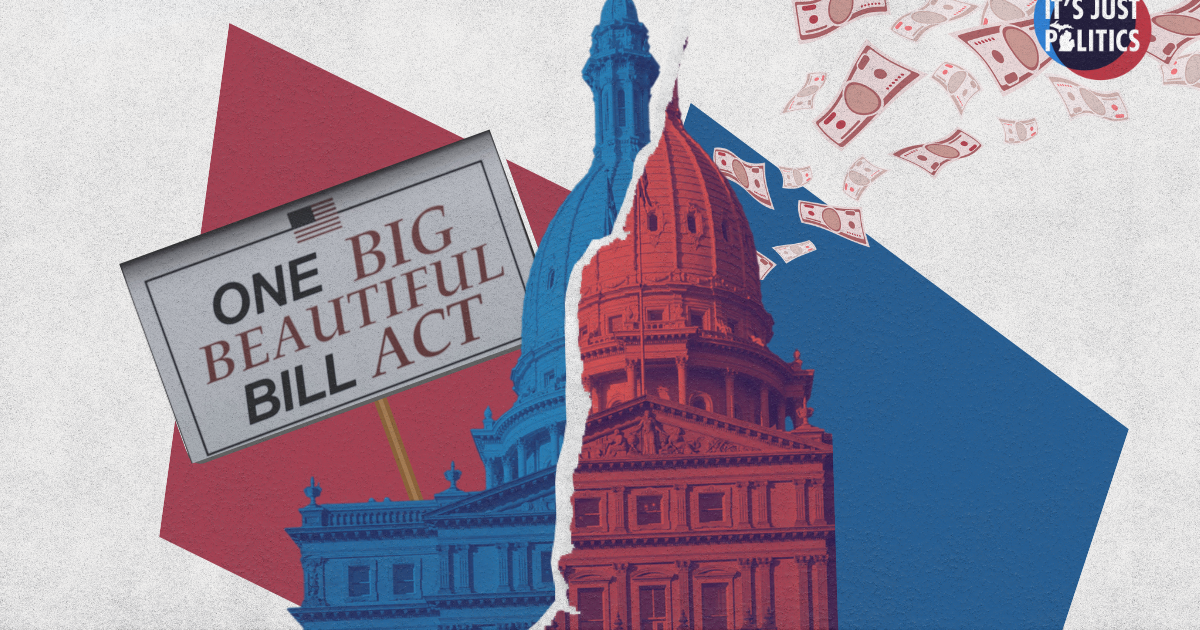
Michigan’s Fiscal Landscape Shifts Following New Federal Legislation
In the wake of the recent federal legislation known as the One Big Beautiful Bill Act (OBBBA), Michigan is facing a daunting challenge regarding its state budget. The act has introduced a $1.1 billion budget shortfall, largely stemming from anticipated reductions in federal funding for critical programs, including healthcare and food assistance. This situation requires careful navigation, as outlined in a thorough analysis by the nonpartisan Citizens Research Council of Michigan.
The report indicates that state budget officials will be confronted with hard choices in light of these federal cuts, needing to either significantly increase spending or reduce services to manage the fiscal impacts effectively. Tension within the state legislature complicates these decisions further, as the Republican-controlled House and the Democrat-led Senate remain entrenched in a deadlock over the fiscal budget and negotiations concerning road funding. This impasse poses risks to fulfilling the commitments made by Governor Gretchen Whitmer during her campaign.
Bob Schneider, a Senior Research Associate at the Citizens Research Council, pointed out the considerable scale of financial adjustments necessitated by the OBBBA. He remarked, “I don’t think we’ve seen anything in terms of the size of the cost shifting mandated by the Big Beautiful Bill anytime in the last several decades,” likening this situation to the Medicaid expansions under the Affordable Care Act but noting a remarkable shift in cost responsibilities.
Schneider also raised alarms about potential hospital closures resulting from lowered Medicaid reimbursements, which would have wider implications beyond Medicaid clients, affecting all residents in those communities.
To address the pressing financial scenario, a formal meeting is needed to update Michigan’s revenue forecasts for the fiscal year 2026 budget, involving the state’s budget chief and the fiscal directors from both legislative chambers. The most recent Revenue Estimating Conference was held in May, and with the urgency of the current situation, a new meeting might be imminent. Jen Flood, the Michigan Budget Director, commented, “The federal reconciliation bill is hundreds of pages long and we’re still evaluating what the full impact is for the State of Michigan.”
The urgency is heightened as Michigan faces an October 1st deadline to resolve these issues, as failure to do so could lead to a government shutdown in the context of the looming $1.1 billion shortfall.
Education and Earmark Oversight in Michigan
In addition to fiscal disturbances, Michigan's education sector is revisiting its strategies following significant investments aimed at improving educational outcomes. Despite the substantial funding, the state is still unable to boost test scores, prompting a reassessment of current educational approaches. An article from Bridge Michigan explores these pressing educational challenges, emphasizing the gap between financial investment and academic achievement.
Moreover, Governor Whitmer is pushing for greater oversight regarding earmark spending in response to past controversies involving misallocated funds. This initiative seeks to enhance transparency within budget processes and is part of a wider effort to improve fiscal governance, as covered by The Detroit News.
As these issues unfold, the state is actively seeking solutions to balance its fiscal responsibilities while enhancing its educational framework.